




-
The United States has warned starving African countries, including Kenya, against a proliferate of goods stolen from Ukraine targeting the African market.
A report by the New York Times on Monday, June 6, indicated that the warning had been sent to 14 countries in mid-May cautioning them that Russian ships were planning to sell grain stolen from Ukraine as the war rages on.
The warning comes just weeks after the Ukrainian officials claimed that Russian forces had stolen approximately 500,000 tonnes of wheat valued at Ksh11 billion (USD100 million).
The report indicated that Russian cargo ships were departing from ports near Ukraine with African countries as their destination.
 A Ukrainian flag in a wheat farmFood Navigator
 As the crisis continues to deepen, East African governments will be faced with tough choices whether to reject the stolen goods or accept them amid the increasing cost of living brought by disruption in the global supply chain.
Destined for Africa alone, Russia and Ukraine are estimated to supply up to 40 per cent of wheat which has since been disrupted by the war as well as the Covid-19 pandemic outbreak.
Commodity prices in the country has spiked with a margin as high as 40 per cent as the United Nations estimates that 17 million people in the horn of Africa are on the brink of hunger as drought persists in Kenya, Somalia and Ethiopia.
The UN is also concerned that the crisis is likely to affect over 1.7 billion people worldwide by pushing them into poverty, destitution, and hunger.
The claims were further fueled by a meeting between Russian President, Vladimir Putin, and African Union Chairman, Macky Sall, in the Black Sea resort city of Sochi where Putin resides.
From their interaction, Sall announced, in a tweet, that 'Russia is ready to ensure the export of its wheat and fertilizer.'
Horn International Institute for Strategic Studies Director, Hassan Khannenje, in an interview with the press, however, observed that the moral question of the legality of purchasing the stolen grain could be inconsequential to African countries faced with drought and famine.
“This is not a dilemma. Africans don’t care where they get their food from, and if someone is going to moralize about that, they are mistaken.
“The need for food is so severe that it’s not something they need to debate," Khannenje told the New York Times.
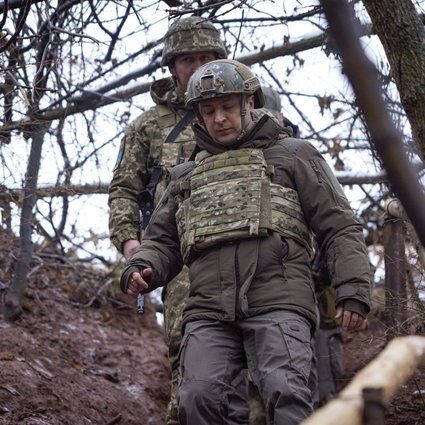 President Volodymyr Zelenskyy at Donbas region, eastern Ukraine, in 2021Courtesy AP stolen
 OutlawedHow to Identify an Illegal Chemist11 June 2022 – 7:49 pm
- RehabilitationGovt to Redesign Prisons to Have State of Art Facilities11 June 2022 – 7:28 pm
- CharityStory of Kenyan Who Raised Ksh51M in 4Hrs Saving a Whole Indian Village11 June 2022 – 7:04 pm
- ClarificationCJ Koome Corrects Nation on Impeachment Report11 June 2022 – 6:04 pm
- Spiced UpNTV Relaunches Morning Show With Veteran Presenters11 June 2022 – 5:15 pm
- CHANGESGachagua to Abolish Police Uniform Introduced by Uhuru, Says it Belongs to Church11 June 2022 – 4:04 pm
- Well PayingJonathan Leakey: The Man Who Minted Millions From Snake Farming in Kenya11 June 2022 – 4:25 pm
- CreativityMinicheps: Story of Visual Artist Behind Viral Creative Photos11 June 2022 – 3:57 pm
- gratefulParents Surprise Doctors After Performing Rare Brain Surgery on Their Daughter11 June 2022 – 2:56 pm
- ReservationsChebukati Steps Aside From Hearing 262 Electoral Disputes11 June 2022 – 1:47 pm
- AvertKenya Calls For Immediate Action After North Korea Fires 8 Missiles11 June 2022 – 12:32 pm
- Fall BackNelson Havi Goes After CJ Koome Over Uhuru Impeachment Remarks11 June 2022 – 12:21 pm
