




Visit the new DW website
Take a look at the beta version of dw.com. We're not done yet! Your opinion can help us make it better.
We use cookies to improve our service for you. You can find more information in our data protection declaration.
- Albanian Shqip
- Amharic አማርኛ
- Arabic العربية
- Bengali বাংলা
- Bosnian B/H/S
- Bulgarian Български
- Chinese (Simplified) 简
- Chinese (Traditional) 繁
- Croatian Hrvatski
- Dari دری
- English English
- French Français
- German Deutsch
- Greek Ελληνικά
- Hausa Hausa
- Hindi हिन्दी
- Indonesian Indonesia
- Kiswahili Kiswahili
- Macedonian Македонски
- Pashto پښتو
- Persian فارسی
- Polish Polski
- Portuguese Português para África
- Portuguese Português do Brasil
- Romanian Română
- Russian Русский
- Serbian Српски/Srpski
- Spanish Español
- Turkish Türkçe
- Ukrainian Українська
- Urdu اردو
Wrong language? Change it here DW.COM has chosen English as your language setting. Advertisement
Africa
Reuniting Africa's missing family members
Around 64,000 people are considered missing in Africa — almost half of them children. War, disasters and crises tear families apart. Many dream of being reunited with their loved ones. But where should the search start?
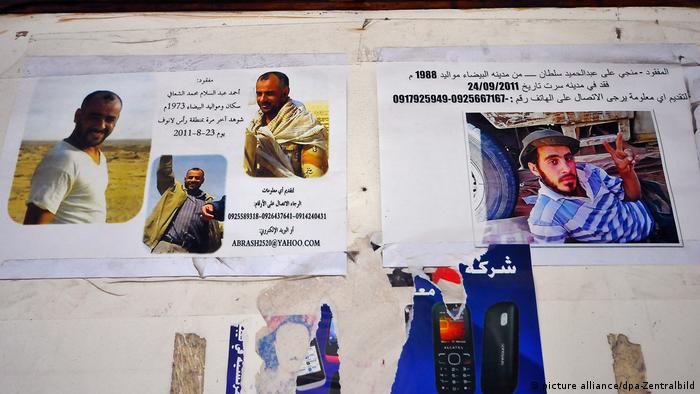
The longer a child or relative is separated from their family, the harder it is to reunite them with their loved ones
For four years, Abdo* was forced to fend for himself without his family, still a child.
The war in South Sudan, which began in 2013, was characterized by attacks on civilians, sexual violence, looting and the recruitment of child soldiers.
And it tore apart thousands of families — including Abdo's.
He had fled Tombura in the west of the country at the age of just 13. Alone.
It wasn't until 2017 that the now 22-year-old was reunited with his mother, with the help of the United Nations Children's Fund (UNICEF).
"I ate only to stay alive, but I never enjoyed it. I was unhappy because I had to think about my son, about where he is," Elena, Abdo's mother, says in a UNICEF report. "It was hard to forget him because I didn't see him dead and bury him."
Children most vulnerable
Between 2013 and 2018, Save the Children, UNICEF and their partners in South Sudan successfully reunited more than 6,000 children with their families.
But in 2018, 15,000 children were still separated from their families or missing.
According to 2022 figures from the International Committee of the Red Cross (ICRC), more than 25,000 minors are missing across Africa.
Children account for 40% of the 64,000 cases of missing persons recorded by the ICRC across Africa.
"We have a significant number of inquiries, but we know that this is just the tip of the iceberg," the ICRC's Celine Doutrelugne told DW in an interview.
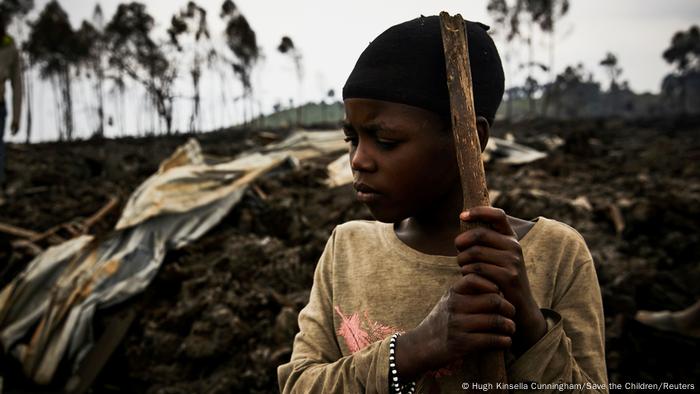
Children are particularly vulnerable once they lose contact with their families
The conflict in Ethiopia's Tigray region, for example, had separated more than 5,000 children from their parents by May 2021, according to Save the Children.
And in eastern Democratic Republic of Congo (DRC), 800 children lost their parents while fleeing fighting between armed groups this year in July alone.
"In the DRC crisis, children are the most vulnerable," Arjika Barke, director of program operations for Save the Children in Goma, pointed out.
"They make up half of all displaced people and are exposed to violence, trafficking, sexual abuse and gender-based violence, recruitment into armed groups, detention and exploitation. The list is long."
The risk of disappearing
"There are different reasons for why people can be separated: Conflict, migration, natural disasters," Doutrelugne explained.
There are more than 35 active armed conflicts in Africa today. Thousands of people cross borders, the Sahara and the Mediterranean every year in search of safety. These journeys often entail great risks, including that of disappearance.
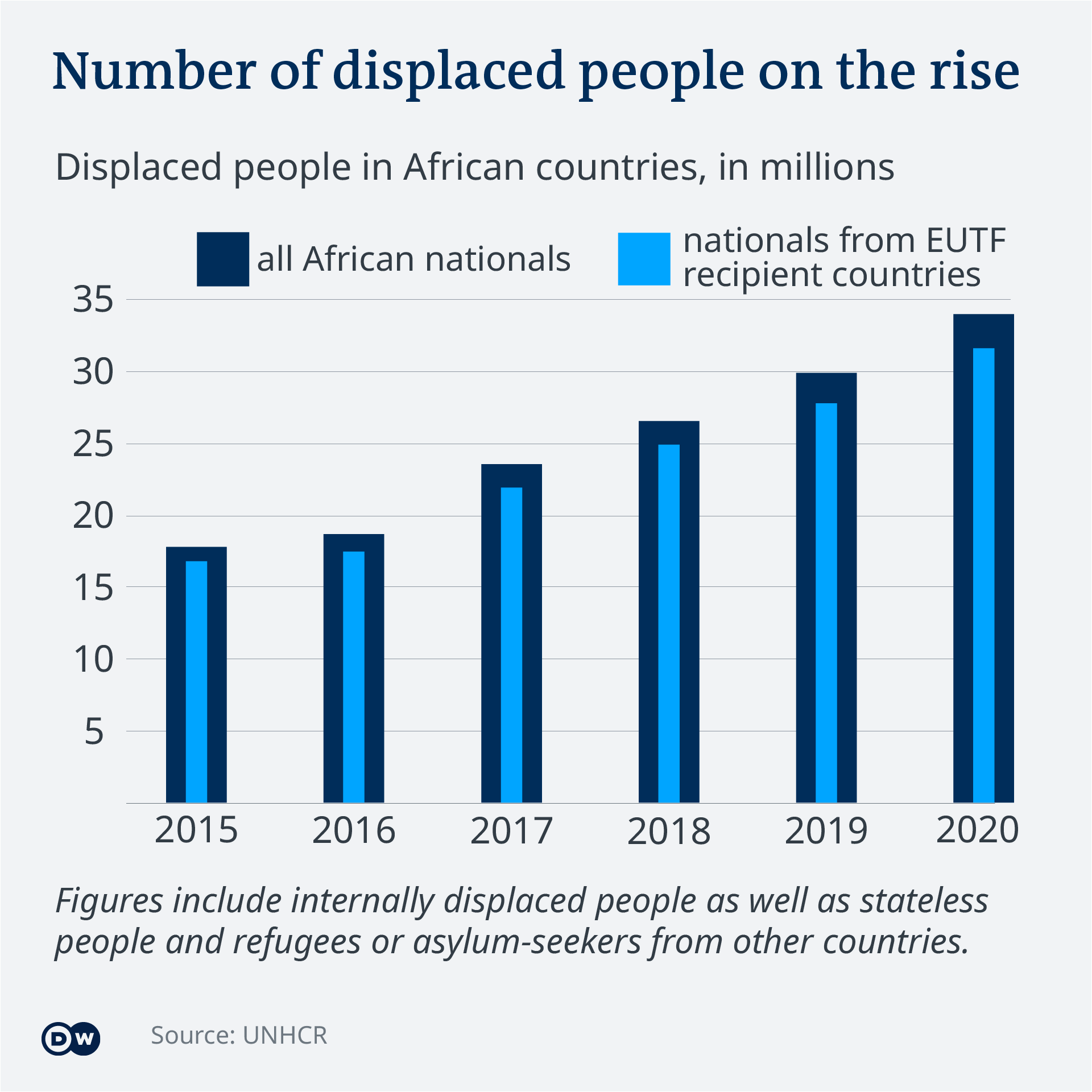
According to reports from the Institute for Security Studies, about 80% of missing persons come from 11 countries: Cameroon, DRC, Ivory Coast, Eritrea, Ethiopia, Guinea, Nigeria, Senegal, Sierra Leone, Somalia, and Sudan.
In Nigeria alone, more than 25,000 people are missing, including nearly 14,000 children — the highest number in Africa.
Nigeria established a registry for missing persons last year and said it has had some success in locating and reuniting them with their families.
Where should the search begin?
Many organizations provide tracing services for families who have been torn apart: The ICRC is active in 26 African countries, including what is now Congo, the Central African Republic, Eritrea, and Rwanda.
Save the Children has projects in over 30 African countries. Sometimes the result is reunification, sometimes it is clarification of what happened to a relative.
In its 2020 annual report, the ICRC stated that in Africa alone, it had facilitated 740,064 phone calls between families and reunited 874 people — including 788 children — with their families.
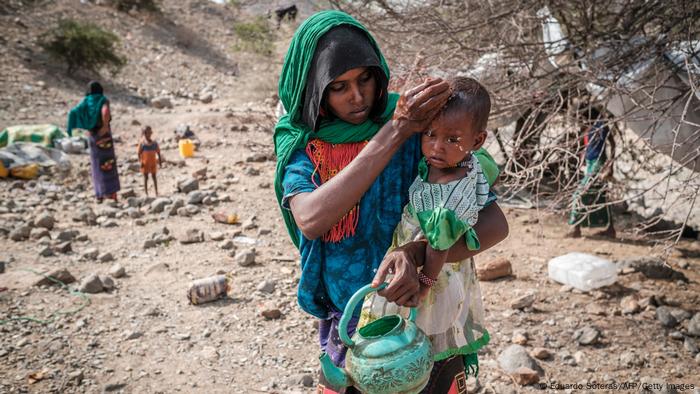
Many people flee from conflict and food crisis in Ethiopia
The International Commission on Missing Persons (ICMP) or church groups such as the Salvation Army are also points of contact for tracing missing persons. Online services such as Trace the Face focus on those who have disappeared on the sea route to Europe.
A difficult search
It's a race against time: the longer a child or relative is separated from his or her family, the harder it is to locate them.
"It takes a global effort," Barke emphasized. "While most children are eventually reunited with their families, it can take several months or even years."
That's because there are major obstacles in the search, Doutrelugne said.
"You have to be able to search inside and outside the country or even the continent. People can be detained and not contact their families because of that. Or there are logistical problems: in many places, there is no internet connection, you have to go in person to search for the person. Access to areas is difficult due to infrastructure or conflict. People are scattered all over the continent, with no set destination. And they could be dead."
Knowing where to look
Three basic conditions are important for a successful reunification.
"First, preventing family separations in the first place by raising awareness so they understand the importance of keeping children connected to their families during displacement," Barke explained.
"Then, helping communities to identify children, as well as cross-border measures. And last, children need to be reunited with their families quickly, and that requires an incredible amount of collaboration and long-term investment: Human resources, technical, financial and operational capacity."
Doutrelugne is also hoping for support from the national authorities.
"It's important that families know where to look and which authorities to contact. Authorities in the countries need to coordinate and share information. Also, it must be possible to communicate with the family. So provide connectivity," the ICRC worker said.
After all, every little message and piece of information can mean that families torn apart and scattered across Africa can quickly be reunited with each other.
(*name changed)
Edited by: Keith Walker
-
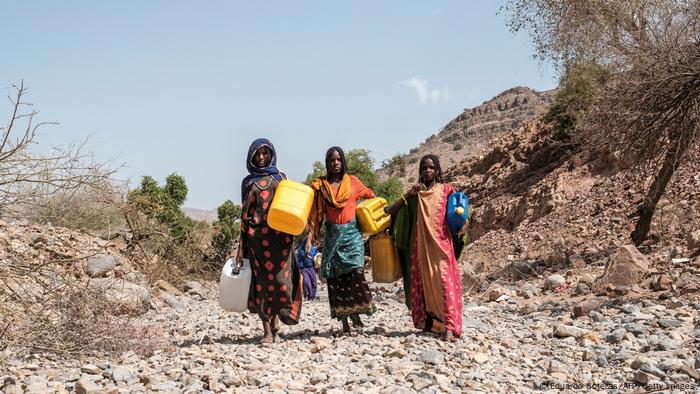
Climate crisis: A world lacking water
Famine risk on the Horn of Africa
Ethiopia, Kenya and Somalia are currently experiencing their worst drought in over 40 years after successive failed rainy seasons. The dry conditions have led to a severe food security issue in the region, with 22 million people at risk of starvation. More than 1 million people have been forced to leave their homes during the drought, which is expected to continue for months.
-
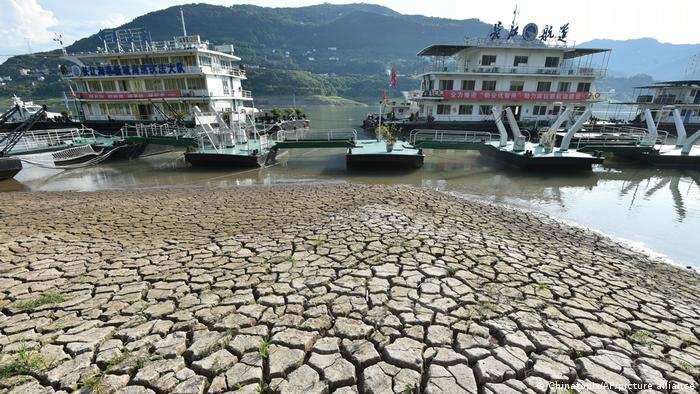
Climate crisis: A world lacking water
Yangtze River dries up
The riverbeds of the world's third-longest river are now exposed during China's record-breaking drought. Low water levels are having an impact on shipping and hydropower, with electricity from the Three Gorges Dam down 40% from last year. In an effort to limit electricity use, some shopping malls are reducing opening hours and factories are rationing power.
-
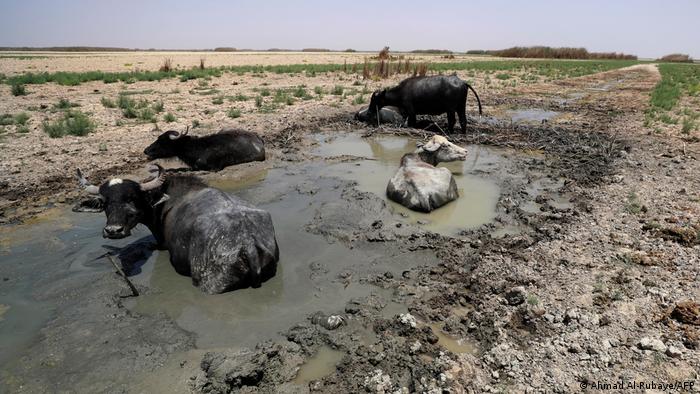
Climate crisis: A world lacking water
Rainfall a rarity in Iraq
Iraq, classified as particularly vulnerable to climate change and desertification, is battling its third successive year of drought. Vast areas of the country's southern marshlands, a UNESCO World Heritage site because of their biodiversity and ancient history, have now dried up. The ongoing drought has contributed to a 17% contraction of its agricultural sector over the past year.
-
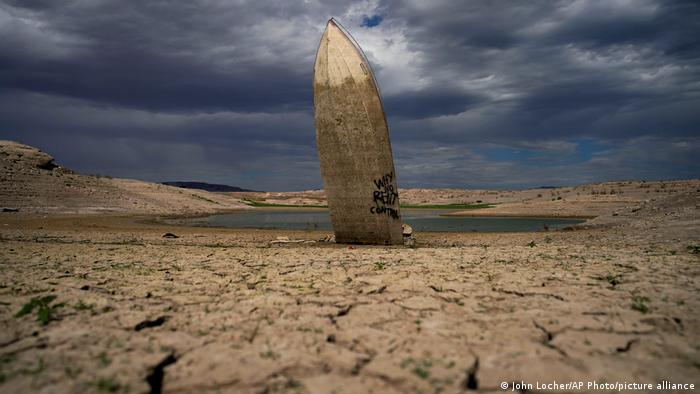
Climate crisis: A world lacking water
Water restrictions in the United States
The Colorado River and its reservoirs run low after over two decades of drought — believed to be the worst in more than 1,000 years. The iconic river flows through the southwest of the United States and into Mexico, supplying millions of people and vast areas of farmland. Below-average rainfall has led to increasing restrictions on water use, including limiting outdoor watering in Los Angeles.
-
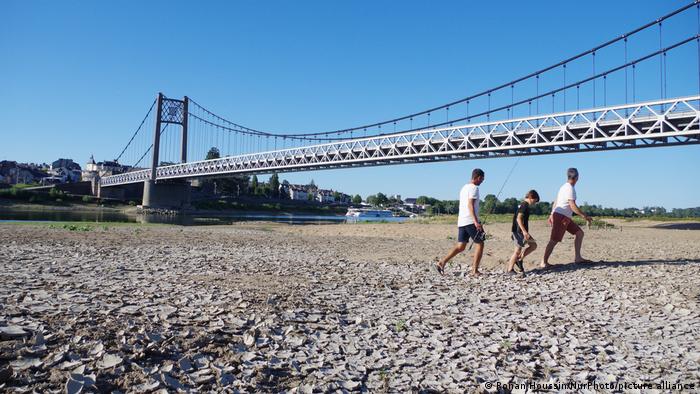
Climate crisis: A world lacking water
47% of Europe under threat of drought
Europe has seen intense heat waves, little rain and wildfires. Almost half of the continent is now threatened by drought — which experts believe could be the worst in 500 years. Major rivers including the Rhine, Po and Loire have dwindled, and low water levels have had an impact on the transport of goods and energy production. Dry, hot conditions have baked European farmland and wilted crops.
-
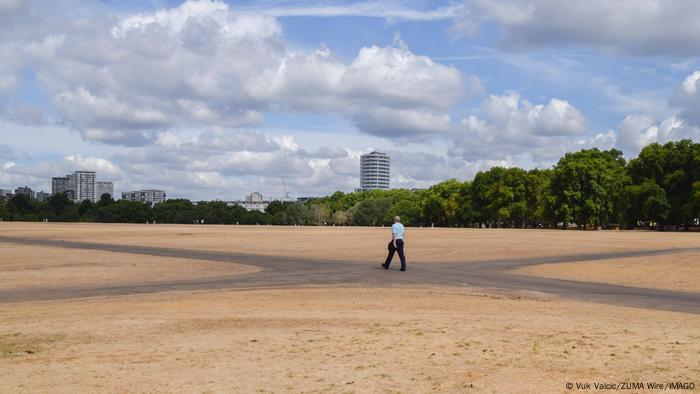
Climate crisis: A world lacking water
Hosepipe bans in UK
Several parts of England were officially moved into drought status in August after the country experienced its driest July since 1935. Authorities also registered Britain's hottest temperature ever on July 19, at 40.2 degrees Celsius (104.3 F) — and over a quarter of river flows were classified as exceptionally low. A number of hosepipe bans are being rolled out during August across the country.
-

Climate crisis: A world lacking water
Spain's prehistoric past uncovered
During Europe's summer of extreme weather, Spain has been particularly hard-hit by drought and heatwaves. The conditions have helped fuel the intense wildfires that have forced thousands of people to evacuate across the country and burned over 280,000 hectares (700,000 acres) of land. Receding water levels at one dam revealed a prehistoric stone circle — dubbed the "Spanish Stonehenge."
-
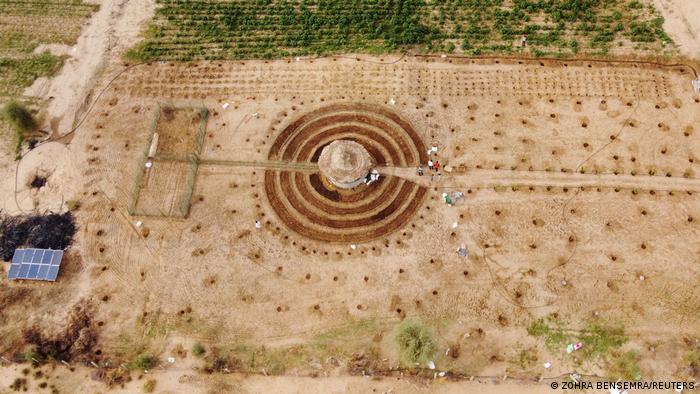
Climate crisis: A world lacking water
Adapting to a drier world
From Tokyo to Cape Town, many countries and cities are adapting to cope with increasingly dry and hot conditions. And the solutions don't necessarily need to be high-tech. In Senegal, farmers are planting circular gardens that allow roots to grow inward, trapping precious water in the region's rare downpours. In Chile and Morocco, people use nets to capture water from fog.
-
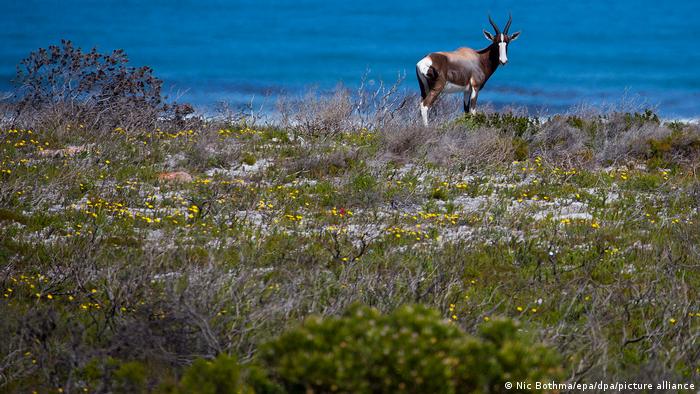
Climate crisis: A world lacking water
Cities fight to stay hydrated
After Cape Town, South Africa, narrowly avoided running out of water in 2018, the city introduced measures to combat drought. One solution has been to remove invasive species such as pine and eucalyptus, which soak up much more water than native plants like the fynbos shrub. The nature-based approach has helped save billions of liters of water.
Author: Holly Young
- Date 12.10.2022
- Author Silja Fröhlich
- Related Subjects ICRC, Nigeria, Energy crisis
- Keywords Search, Nigeria, South Sudan, Congo, DRC, Red Cross, Save the Children, family, crisis, conflict, catastrophe, missing
- Feedback: Send us your feedback.
- Print Print this page
- Permalink https://p.dw.com/p/4I4yy
Related content
Ukraine: Mariupol rejects surrender, Kyiv hit by shelling — as it happened 21.03.2022
At least eight people have been killed in an explosion at a shopping center in Kyiv. Meanwhile, the Pentagon has accused Russian forces of committing war crimes in Ukraine.
Mass flooding exacerbates hardships of war in Yemen 13.08.2022
Heavy rain and flash floods have added to the problems caused by Yemen's civil war. Despite the current truce, the humanitarian situation remains dire, and the next catastrophe might be already looming off the coast.
East Africa faces worst hunger crisis in decades 31.03.2022
Millions of people in Kenya, Ethiopia, and Somalia face starvation due to delayed rains and a lackluster growing season. Aid organizations warn of a catastrophe if urgent action isn't taken.
- Date 12.10.2022
- Author Silja Fröhlich
- Related Subjects ICRC, Nigeria, Energy crisis
- Keywords Search, Nigeria, South Sudan, Congo, DRC, Red Cross, Save the Children, family, crisis, conflict, catastrophe, missing
- Send us your feedback.
- Print Print this page
- Permalink https://p.dw.com/p/4I4yy
Advertisement 
Send us your feedback via SMS
Got an opinion about the stories making headlines? Send us a text at +49-160-9575 9510. International SMS charges apply. Please make sure to include your name and your country. We will sample your texts in our show.
