




— Dreams Time
ON SEVERAL occasions, the issue of smallish intra-regional trade in South Asia has been raised, which is only 5 per cent while it is more than 50 per cent in Southeast Asia and 22 per cent in Sub-Saharan Africa. Among EU countries, the trade share is also higher than 27 per cent. A recent study by the World Bank says that it is more expensive for a company in Bangladesh to trade with a company in India than with a company in Brazil or Germany. Historically, South Asia is one of the least integrated regions when compared with other regions.
One of the identified factors is inadequate regional infrastructure. The road network is poor and congested, and the trade infrastructure, such as land ports and custom houses, is insufficient to handle the current projected trade volumes. The regulatory process is similarly complicated, mostly paper-based, and characterised by a lack of a digital system, poor border management, etc. Bangladesh and Nepal are going to be graduated to developing countries; regional integration could be one of the alternatives for them to be competitive.

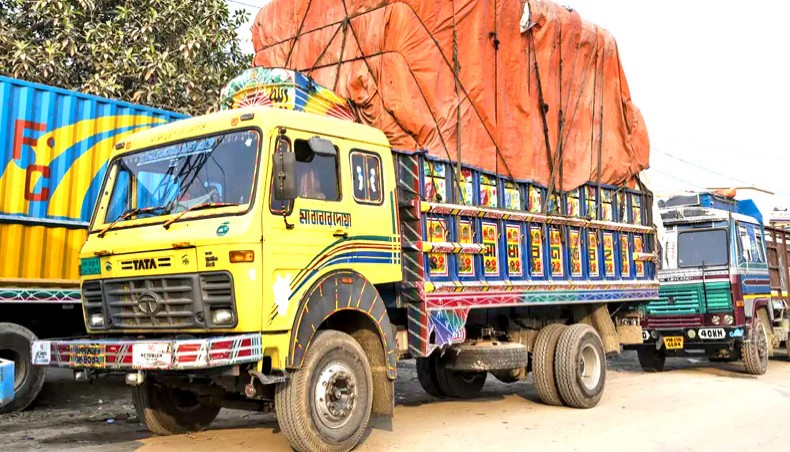
Three regional countries, Bangladesh, Nepal and Bhutan, have come under a project for accelerating transport and trade connectivity in Eastern South Asia. Several relevant government implementing agencies have been earmarked for implementation of the seven-year project, which was signed by the government of Bangladesh on June 28, 2022. In Bangladesh, implementing agencies are the Land Port Authority, the shipping ministry, the customs department, the revenue board, the Roads and Highways Division, and the road transport and bridges ministry. The project will address three key constraints for enhancing regional trade: manual and paper-based trade processes; non-resilient, unsafe, and congested transport and trade infrastructure; restrictive policies, regulations, and processes; and inadequate capacity to support cross-border trade transport.
The project is expecting at least a 30 per cent increase in freight throughput at key border points, a 30 per cent reduction in travel time along the project corridor, a 40 per cent reduction in annual fatalities along the project corridor, a reduction in physical customs inspection from the current 25 per cent to 10 per cent and an increase in customs clearance to 60 per cent through the green channel, which is presently almost nil. These are all very good expectations. If these can be achieved among regional countries, it will ensure better regional connectivity and contribute to trade enhancement among neighbouring countries.
The implementation strategies have been fixed rightly; similar organisations and ministries of the regional countries need to work closely to create a win-win situation among all those concerned; and the political mindset for connectivity and capacities will greatly contribute to the success of this seven-year-long project.
There are examples of similar initiatives by other regional countries. Some of these are the Belt and Road Initiative, initiated in 2013, the East African Community, the Central Asia Regional Economic Cooperation, the Gulf Cooperation Council, etc. The Belt and Road Initiative of China is for increasing regional connectivity, like ACCESS; however, the BRI is a huge initiative and so far seems to be successful in increasing trade and business. It also involved the construction of roads, railways, ports and infrastructural development to enhance trade, investment, connectivity, and regional value chains. The BRI helped in the construction of a number of infrastructure projects, such as the China-Pakistan Economic Corridor, the Eurasian Land Bridge, and the Piraeus Port in Greece. Bangladesh, as a part of BRI, can work for enhanced connectivity, explore new trade and business opportunities, especially for FDI, and increase connectivity with Southeast Asian countries.
The Central Asia Regional Economic Cooperation, as a partnership of eleven countries, has facilitated knowledge sharing and capability-building activities among member states. The Gulf Cooperation Council has extended support for energy cooperation, finance, tourism and health care, promoting intra-regional trade investment and knowledge sharing.
It is seen from the statistics that from 2013 to 2022, the trade in goods between China and BRI countries has doubled from $1.04 trillion to $2.07 trillion, with an average growth of 8 per cent. China’s bilateral investment in BRI countries increased by $270 billion. There are examples in front of us of how regional countries have benefited from regional infrastructural developments.
Through ACCESS, some specific activities have been planned, such as the automation of border management systems at key border points. The improvement of the Sylhet-Sheola (43 kilometres) section of the Bangladesh-China-India-Myanmar Economic Corridor also increased the capacity of some land ports such as Benapole, Bhomra, and Burimari. Over and above that, technical assistance support for border management, risk management, transit facilitation, customs cooperation and harmonising customs requirements has also been planned. Now it is up to the pro-activeness of the government organisations on how best they can utilise the benefits of the project to implement a supportive infrastructure with regional countries for private-to-private collaboration and institutional cooperation for attaining a good global share of business.
Considering the low scale of intra-regional trade in South Asian countries, a number of studies and research have been accomplished; however, regional trade remains almost the same. SAPTA and SAFTA could not bring any substantial benefits because of the unique nature of South Asian countries. Some of these are: diversity in respect of economic policies, tax structures, regulatory framework, trade partners and investment opportunities.
South Asian countries have diverse trade partners worldwide. For instance, India has extensive trade ties with countries in North America, Europe and the Middle East. Bangladesh and Pakistan have strong trade relations with the European Union, the United States and other Asian countries. Sri Lanka trades with various countries, including India, the United States and the European Union.
Furthermore, some complementarities exist in respect of exports, such as textiles and garments, which are the main export products in almost all South Asian countries. Of course, India has expertise in information technology services, pharmaceuticals, automotive manufacturing, etc. While Pakistan has capabilities in chemicals, pharmaceuticals, cement, steel, and automobiles, Sri Lanka has capabilities in agricultural products, tourism, hospitality, IT, BPO, etc. Bangladesh has a thriving textile and apparel sector, while it also has capabilities in agriculture, pharmaceuticals, leather and leather goods, shipbuilding, etc. There is enough room for collaboration and improvement of the regulatory framework, policies, standards and related hard and soft infrastructure to meet the several needs of the regional countries, including new job creation.
Bangladesh is going to be graduated to a developing country after about two and a half years; a number of preferential arrangements may face erosion, while intra-regional trade can be an avenue for export and investment growth. Bangladesh needs to define its strategies based on its own priorities and its smooth transition strategy for transformation.
From a World Bank source of information, it is seen that with the signing and implementation of a free trade agreement with India, Bangladesh’s exports can be increased by about 180 per cent. High connectivity costs are a deterrent to increasing trade and business among South Asian countries. The benefits of regional connectivity projects for improving logistics infrastructure have to be efficiently exploited to increase trade and businesses in the regional countries.
Ferdaus Ara Begum is CEO at Build, a public-private dialogue platform on private sector development.
More about:
Want stories like this in your inbox?
Sign up to exclusive daily email
Advertisement