




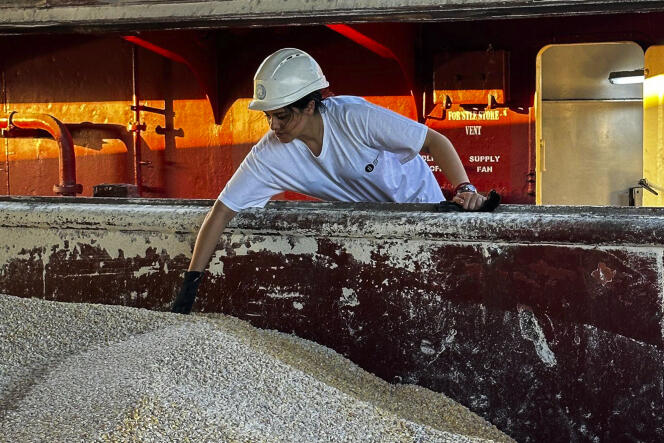
A month ago, on June 17, a delegation of African heads of state visited Russia. They pleaded with Vladimir Putin not only for an end to the war in Ukraine, but also for the continuation of the agreement on Ukrainian grain exports, which Moscow was threatening to abandon. The South African presidency, through its spokesperson, notably defended the "importance of grain deliveries to Africa to alleviate food insecurity." The plea was evidently not heeded. On Monday, July 17, the Kremlin announced its withdrawal from the deal signed in July 2022.
African countries, many of which face high inflation and growing difficulties in feeding their populations, import a large proportion of their cereals from outside the continent. By contrast, Ukraine and Russia are among the world's leading exporters of wheat, barley and corn. The African Development Bank (ADB) estimated that, by 2020, 15 out of 54 African countries will buy more than half their wheat from one of these two countries.
"We are particularly concerned about East Africa. Russia and Ukraine supply the majority of this region's cereals," declared Akinwumi Adesina, President of this pan-African institution, in early 2022. Kenya, Ethiopia and Somalia were affected by a record drought at the time, threatening 13 million people with famine. Following the grain deal, the arrival in the region in August 2022 of the first ship of Ukrainian wheat was described as a "relief" by the US Special Envoy for Global Food Security, Cary Fowler.
Read more Russia's blackmail on global food security is unjustifiable
Egypt, one of the world's largest wheat importers
The collapse of the agreement that allowed 33 million tonnes of Ukrainian grain to be exported (largely benefiting Turkey and China, but also the UN World Food Program) will primarily affect Ukrainian exporters. The effect on Russian sales is less certain, although international sanctions do not apply to agricultural products.
For economist Charlie Robertson, it is North Africa in particular that will suffer from Russia's withdrawal from the agreement, especially Egypt, one of the world's largest wheat importers. "The majority of Egypt's grain imports come from Russia and Ukraine, and anything that compromises this trade, anything that makes it more expensive, is a direct blow," notes the former chief economist at Renaissance Capital, who has moved on to the FIM Partners fund. He points out that in a country with 30% inflation, any rise in "food prices hurts the man in the street." According to Reuters, Egypt has reduced its dependence on Ukrainian wheat from 28% to 9% of imports between 2021 and 2022 in favor of Russian wheat (from 50% to 57%).
You have 42.82% of this article left to read. The rest is for subscribers only.
