






- GO
Tue, Jan 17, 2023 page9
- A pivotal year for Africa’s climate progress lies ahead
Africa can achieve a carbon-neutral economy, but first it must remove barriers to trade and innovation, address institutional decay, and build on diplomatic breakthroughs
- By Landry Signe
-
The past year has been challenging for Africa. After a hopeful 2021, during which the continent-wide GDP increased by nearly 7 percent and every region experienced real growth, the economy slowed last year amid rising inflation, monetary tightening and geopolitical tensions.
However, it was also a year when African countries were finally able to make their voices heard on the global stage. At the start of another critical year, with the continent’s GDP projected to increase at a relatively modest pace of 4.1 percent, governments can take several steps to boost economic activity and ensure a sustainable future.
For starters, policymakers must foster trade and investment through the African Continental Free Trade Area (AfCFTA). Under a fully implemented AfCFTA, Africa’s combined consumer and business spending is expected to reach US$6.7 trillion by 2030 and US$16.12 trillion by 2050, transforming value chains and potentially reducing poverty across the continent.
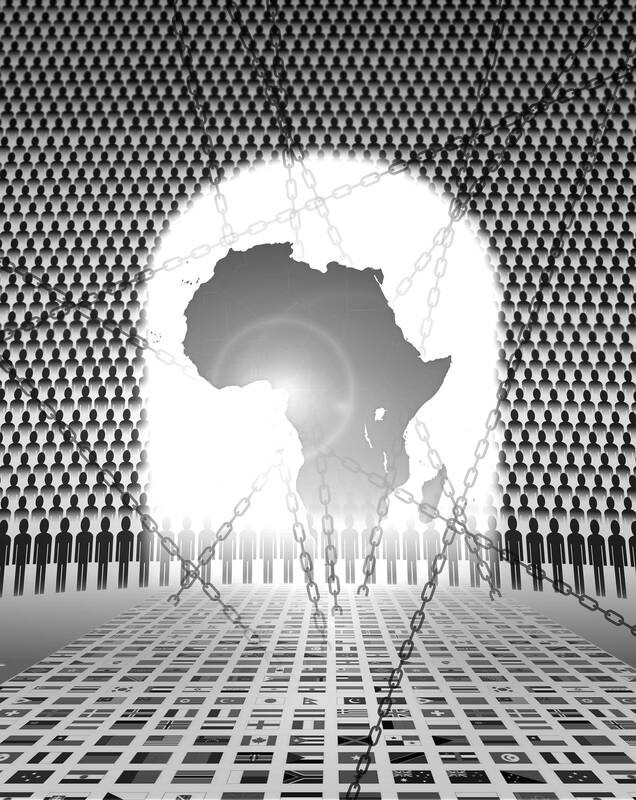
Illustration: Yusha
Eight countries — Cameroon, Egypt, Ghana, Kenya, Mauritius, Rwanda, Tanzania and Tunisia — began trading under AfCFTA’s Guided Trade Initiative last year. To build on the momentum this year, policymakers must accelerate the implementation of the agreement’s next phases, improve intra-African coordination and call attention to early successes.
Moreover, eliminating non-tariff barriers by introducing reporting and monitoring mechanisms would reduce business costs and encourage countries to increase imports.
Policymakers should also rely more on Fourth Industrial Revolution technologies, such as artificial intelligence and cloud computing, to create new value chains and strengthen economic resilience. To realize the transformative potential of these tools, political leaders must honor the infrastructure commitments they made at last year’s African Union’s summit on industrialization and economic diversification.
Policymakers should also consider investing in strategically important industries, such as pharmaceuticals, agriculture and agro-processing, the automotive sector and logistics. Sub-Saharan governments must also invest in education, particularly in STEM (science, technology, engineering, mathematics) and digital skills, and seek partnerships with private-sector actors to expand access to information and communication services, including mobile phones.
At the same time, because Africa’s economic future hinges importantly on its ability to redefine its global status, governments must build on recent diplomatic breakthroughs.
In the past few years, African governments have assumed a more prominent international role, presenting a united front in multilateral climate negotiations. US President Joe Biden has called for the African Union to become a permanent member of the G20, which would help solidify its position as the world’s top agriculture negotiating group.
Agreeing on a shared agenda would enable African leaders to secure funding for projects related to sustainability and hold the US, China and the EU to their promises.
Given the impact of the COVID-19 pandemic, rising inflation and climate change on income and wealth disparities across Africa, concerted action is becoming all the more important. Without it, the UN estimates that at least 492 million Africans would be pushed into extreme poverty by 2030, and at least 350 million would remain extremely poor in 2050.
Moreover, despite recent progress toward gender equality in educational opportunities and political representation, African women are still more likely to live below the international poverty line, experience severe food insecurity and leave the labor force to perform care work.
To achieve the UN Sustainable Development Goals, African countries must focus on providing quality education, healthcare and job-creation programs that leave no one behind, particularly women and young people. African development agencies such as the Development Agency must be given the resources and authority they need to fulfill their missions.
Such capacity building, however, requires African governments to address institutional decay. As Freedom House’s annual Freedom in the World report shows, last year was the 16th consecutive year of global democratic decline, and Africa is no exception.
If allowed to persist, political instability, corruption and lack of accountability can undermine even perfect policies. By working with partners and using evidence-based methodologies to monitor projects, assist in implementation and guide decisionmaking, African countries could bridge the gap between policy goals and outcomes.
Lastly, ensuring a fair and sustainable green transition remains the most pressing issue facing Africa, the most climate-vulnerable continent. While African countries would need US$2.8 trillion by 2030 to meet the emissions targets set by the 2015 Paris agreement, Africa’s annual inflows of climate finance currently amount to only US$30 billion.
However, governments can and must build on the momentum generated last year by the UN Climate Change Conference in Egypt, which resulted in a groundbreaking decision to create a “loss and damage” fund to help developing countries mitigate the worst effects of climate change. Policymakers could mobilize such resources to invest in adaptation efforts and renewable energy.
African leaders must use this moment to accelerate the continent’s shift to a carbon-neutral economy. In what is sure to be a pivotal year for climate-change action, Africa can and must make significant progress toward a more equitable, sustainable and resilient future.
Landry Signe is a professor and executive director at the Thunderbird School of Global Management in Washington, a senior fellow at the Brookings Institution, a distinguished fellow at Stanford University and cochair of the World Economic Forum’s Regional Action Group for Africa.
Copyright: Project Syndicate
Comments will be moderated. Keep comments relevant to the article. Remarks containing abusive and obscene language, personal attacks of any kind or promotion will be removed and the user banned. Final decision will be at the discretion of the Taipei Times.
- Most Popular


- You might also like
- EDITORIAL: China’s COVID-19 failures continue 2023-01-15
China on Tuesday said it has stopped issuing short-term visas for Japanese and South Koreans, in its first retaliatory measure against countries that introduced COVID-19-related restrictions on travelers from China. More than a dozen countries, including Taiwan, introduced such curbs after China last month lifted its “zero COVID-19” policy, and stopped reporting daily case totals for the disease amid a nationwide surge triggered by the abrupt change in disease prevention policy. On Sunday last week, it also opened its border for outbound travelers Japan and South Korea require arrivals from China, regardless of nationality, to take pre-departure and on-arrival COVID-19 tests.
-
 John J. Tkacik On Taiwan: Qin Gang, Song Tao and ‘Special Agent Diplomacy’ 2023-01-16
In 1988, young Comrade Qin Gang (秦剛) did not graduate from the China Foreign Affairs University (外交學院), China’s training academy for diplomats. He never attended the Institute. Instead, he graduated from Beijing’s “University of International Relations” (國際關係學院) which, as I recall from early in my diplomatic career, was a campus well-known for its affiliation with the Chinese Communist Party Center’s intelligence services. In 1964, because of the school’s critical status as a training ground for special operatives, the UIR was named a “key institute of higher learning” (重點高校) — together with elite Beijing and Tsinghua universities — as an academy
- Taiwan, India need to keep talking 2023-01-18
There is a constant debate regarding countries’ responses to a potential “Taiwan contingency,” but relatively little discussion on how to deter China from invading Taiwan. What must be reinforced is that the Indo-Pacific construct is about preventing conflicts and maintaining peace and stability in the region. India views Taiwan differently than Western countries do. For India, Taiwan is not a pawn in a game of geopolitical chess. Its perception of Taiwan is driven by its economic interests and that Taiwan is a like-minded country in the Indo-Pacific region. Unlike much of the West, India’s Taiwan policy is not limited to the “China
By Sana Hashmi 胡莎娜
- The Liberty Times Editorial: Taiwan becoming spy playground 2023-01-17
Two section chiefs of the Enrollment Division of the Ministry of Health and Welfare’s National Health Insurance Administration (NHIA) and one former NHIA secretary-general have been accused of inappropriately accessing the personal data of insured people over a period of 13 years. The Taipei District Prosecutors’ Office has opened an investigation focused on the offenses of accessing and gathering national intelligence information, on the grounds that the personal data in question involves “intelligence agency personnel” such as military, police, investigation officials and immigration officers. The ease with which NHIA staff could use their positions to snoop on the information of insured
- EDITORIAL: China’s COVID-19 failures continue 2023-01-15
Copyright © 1999-2023 The Taipei Times. All rights reserved.
