




 Connect with us
By Kestér Kenn Klomegâh
Under the aegis of the African Union (AU), the continental organisation, the AU Media Fellowship programme, is frog-leaping to create a positive and compelling brand image for the continent on the global landscape. With financial support from the African Union, media groups are constantly retraining and learning the collaborative strategic art and skills in rebranding Africa within the emerging multipolar world and as an integral part of the African Agenda 2063.
The AU Media Fellowship Programme is a newly created platform for cross-border collaborative journalism, which has already been hailed for paving the way for practising media professionals and content creators to break away from the longstanding overreliance on external sources for information about developments on the continent.
For the one-year-long fellowship, groups are broadly chosen from different African countries. Over the past months, media fellows have been exploring ways to not only balance the narrative of developments on the continent but also to operationalize a network and frameworks of exchange with each other in a bid to boost the reach and impact of their content and reporting.
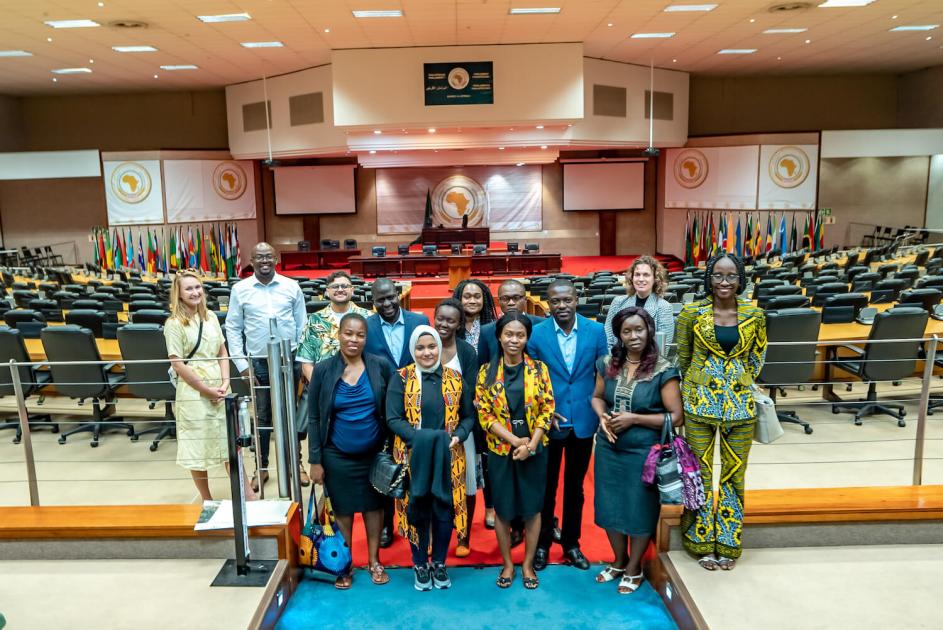
After a successful study tour in Germany and the AU headquarters in Addis Ababa, Ethiopia, the group moved Phase 3 of the AU Media Fellowship two-week long study tour, to AU organs in South Africa, at the Pan-African Parliament.
The study tour to the AU organs and specialized agencies began at the AU Pan-African Parliament, African Union Development Agency (AUDA- NEPAD), Africa Peer Review Mechanism (APRM), Africa Risk Capacity (ARC) and South African institutions, which include South Africa Broadcasting (SABC), The MultiChoice Group, Brand South Africa, Wits School of Journalism which hosted the 3rd series of the AU Media Roundtable. The study tour concluded with a guided tour to the Republic of South Africa Parliament and Media Lab retreat.
The 4th Vice-President of the Pan-African Parliament (PAP), François Ango Ndoutoume, welcomed the AU Media Fellows to PAP which he described as the home of the African people. He further refers to the role of the PAP’s mandate to ensure the full participation of African peoples in the economic development and integration of the continent.
“The mandate of the PAP as a representation of the peoples of Africa cannot be implemented without engaging and involving citizens and civil society. The media, therefore, remains the most effective tool to achieve this objective,” Ndoutoume said and continued his remarks by highlighting the critical role the media plays in enhancing active citizen engagement.
The PAP depends on journalists to inform the public about its work. It is also important to note that covering the continental parliament requires an understanding of its origin, mandate and rules of procedure, according to his explanation, and finally called on the media to regain control of the editorial line and the media coverage dedicated to Africa, as it is the only way to counter negative narratives about the continent.
According to Leslie Richer, the African Union Director for Information and Communication, cross-border collaborative journalism being shaped through the AU Media Fellowship positions media outlets and journalists across Africa to own the narrative of the continent.
“From your study trip in Germany, Ethiopia, and now in South Africa, this connecting of thoughts will help not only to do your work better but also, as journalists, you are creating a network, you are actually better able to address the issues on the continent and to create narratives that we want. A balanced narrative of developments on the continent, one that is a clear representation of who we are but one that speaks of the situation that we find ourselves in,” Richer said.
“We started this programme so that you can start realizing that you’re not in competition with each other. There’s a bigger challenge for us because we do not even collaborate as journalists, and that must change. So that’s the role the African Union has to play, to bring media houses and journalists together,” she said at the Pan-Africa Parliament last November 2022.
Last December, as part of the Africa Union Media Fellowship programme, Areff Samir and Amira Sayed, both AU Media Fellows -2022, hosted Dr Dinesh Balliah, Acting Director of the Centre of Journalism at Wits University. Naeemah Dudan, Producer at Seen.tv, Veerashni Pillay, founder of news start-up explain.co.za, and Lindokuhle Nzuza, project coordinator at Jamlab Africa and panellists to unpack the changing media landscape, share best practices on how to leverage technology to shape our narratives and discuss sustainable business model’s journalist can adapt to survive in the fast-paced media industry.
Speaking during the meeting, Dinesh Balliah, Acting Director at the Centre of Journalism at Wits University, shed light on the constantly changing needs of media audiences in Africa. She focused on how the needs of media consumers in Africa are fast changing, which calls for new approaches in the media industries in Africa.
She said, “The media ecosystem is changing, and thus the curriculum of journalism has to improve to meet the dynamic, ever-changing needs of the audiences. Today, we give assignments to students, and we instruct them to present them in different formats like podcasting, data visualization etc.”
Telling Africa stories and creating African content will be more successful in the future when media students and practising media personalities embrace the digital ways of practicing journalism. More people can access the internet and search for news and media content online on Podcasts, Twitter, blogs, and Youtube, among other platforms. In the near future, African audiences will rely more on getting news and media content on online platforms. This calls for a necessary and immediate revision of the journalism curriculum in Africa.
In addition, donor companies and funding stakeholders of different media houses are changing their selection criteria. Naeemah Dudan listed ways of getting funders and donors to support media work. She said that media personalities should find better approaches to donors and mentioned that good proposals for any idea are the key to persuading donors. Therefore, media professionals in Africa can thrive when they master the skills of writing persuasive proposals to donors and funding stakeholders.
Lindokuhle Nzuza, the Project Coordinator at Jamlab Africa, an incubator for innovative journalism and media in projects from across Africa, aims to strengthen innovation in African independent journalism and media, to grow the diversity of the continent’s voices in the public space. This is a great contribution to equip media practitioners to counter stereotypes on the digital edge.
There was also a networking session with the Africa Regional Media Hub, which is part of the US Department of State’s Bureau of Public Affairs that works to connect US policymakers and experts with media in Africa. The session took place in December 2022.
The Deputy Director for the US Africa Regional Media, Tiffany Jackson-Zunker, has reiterated the United States’ commitment to working with African media to include and elevate African voices in the most consequential global conversations.
Tiffany Jackson-Zunker said, “The role of the media in a democracy is critical, and our hub’s primary objective is to support journalists, specifically those on the African continent, by providing resources on U.S.-Africa policy, opportunities to engage with U.S. officials, and responding to queries from media representatives, the journalists who work with us have more tools at their disposal to write the stories their audiences want and need.”
The tour provided an opportunity for the media fellows to gain further insights into US-Africa policy, particularly pertaining to its engagement with the media in Africa. The visit to the media hub comes after the AU Media fellows were hosted in Ethiopia by the US Permanent Representative to the African Union Ambassador Jessica Lapenn.
Director for Information and Communication at the African Union Commission (AUC), Leslie Richer, added that “the two organizations have a common goal of ensuring top-quality, balanced narrative on the continent, which will result in equally high-calibre reportage and for us, a crucial step towards achieving this is to provide the fellows with the capacity to deliver through such interactions and tours.”
The AU Media Fellowship program is an excellent platform for African journalists to gain a continent-wide perspective on news creation, media operations, their role in reframing the African narrative, and the power of professional networking. The Africa Regional Media Hub is now a welcomed member of their larger network and remains as a strong supporter of the African Union’s efforts to bolster media professionals across the continent.
Brand South-Africa, Acting Chief Executive Officer (CEO) Sithembile Ntombela, took the AU Media Fellows through the concept of nation branding when the Media Fellows paid a working visit to the offices of Brand South Africa as part of activities for a two-week study trip to South Africa for the 29th November to 10th December.
According to The Brand SA CEO, Africans must accept and embrace the Continentэs uniqueness. “We have to recognize the uniqueness of each and every country’s offering and package it in a way that complements each other in grabbing the attention of the world so that Africa becomes better. The important thing about the concept of branding Africa is the alignment and our intentions for the development and positive impact of the social and economic benefit of all of us in Africa,” she told them.
She concluded her remarks by commending the African Union for being instrumental in taking leadership and being a facilitator of concepts and programmes that promotes regional integration, like the AU Media fellowship. The final phase of the fellowship programme will be at the Continental AU Media roundtable to discuss the future of Media in Africa in May 2023.
The AU Media Fellowship programme is implemented by the AU through the Information and Communication directorate, supported by the German Agency for International Cooperation (GIZ).
Through the fellowship, the AU seeks to boost ownership of key policies and programmes and accelerate the achievement of goals under its Agenda 2063, which targets delivering on socio-economic and development changes across Africa.
Related
Ukraine, Africa to Bolster Economic Cooperation
IFC Injects $150m into Nubank to Boost Operations, Access in Colombia


World
Russia Plans New Trade, Investment Cooperation With Africa 
Published
2 days ago
on
January 20, 2023
By
By Kestér Kenn Klomegâh
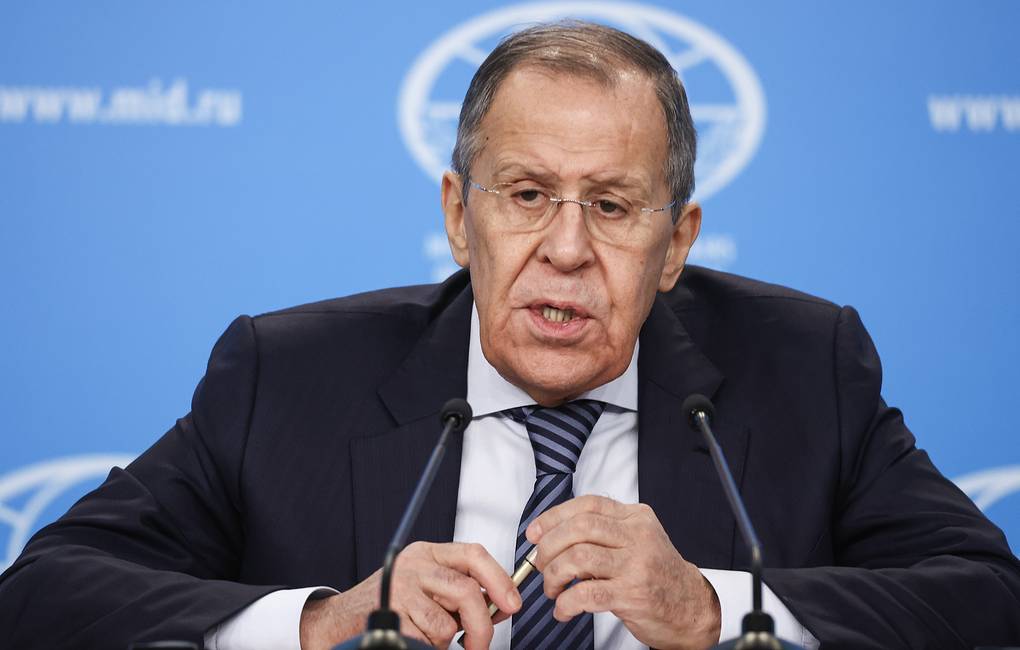
Russian Foreign Minister, Mr Sergey Lavrov, said at his annual press conference on January 18 that Russia and Africa would hold a summit in July this year and a number of documents, including new instruments of trade and investment cooperation, were being prepared to readjust methods of interaction amid the environment of sanctions, and in the context of geopolitical changes.
“As you know, we are planning the second summit in St. Petersburg, and we are preparing a whole series of activities for it. Documents are being prepared on the readjustment of interaction mechanisms in conditions and sanctions and threats, new instruments of trade and investment cooperation, supply chain systems and payments. The transition to payments in national currencies is underway. This is not a quick process, but it is progressing and gaining momentum,” the Foreign Minister said.
Ahead of the forthcoming African leaders gathering, the South African Institute of International Affairs has put into circulation its latest policy report on Russia-African relations.
In the introductory chapter, Steven Gruzd, Samuel Ramani and Cayley Clifford – have summarized various aspects of the developments between Russia and Africa over the past few years and finally questioned the impact of Russia’s policy on Africa.
According to Steven Gruzd, Samuel Ramani and Cayley Clifford, this special far-reaching policy report includes academic research from leading Russian, African and international scholars. It addresses the dimensions of Russian power projection in Africa and new frontiers of Russian influence and provides a roadmap towards understanding how Russia is perceived in Africa.
The report highlights narratives about anti-colonialism and describes how these sources of solidarity are transmitted by Russian elites to their African public. For seeking long-term influence, Russian elites have oftentimes used elements of anti-colonialism as part of the current policy to control the perceptions of Africans and primarily as new tactics for power projection in Africa.
While it has made thousands of investment promises and signed several bilateral agreements, Russia is largely invisible in economic sectors and keeps a remote distance from participating in building critical infrastructures, investing in industrial spheres and in the newly created single market. Moscow simply builds relations on illusions and lacks the capacity and overwhelming power to realize its policy goals in Africa.
That report says Russia’s expanding influence in Africa is compelling, but a closer examination further reveals a murkier picture. Despite Putin’s lofty trade targets, Russia’s trade with Africa stands at just $20 billion, which is lower than that of India or Turkey.
Over the previous years, similar observations on the stagnation in Russia-Africa economic and trade relations were also noted by politicians and academic researchers. A publication headlined “Russian Business in Africa: Missed Opportunities and Prospects” appeared in the foreign policy journal Russia in Global Affairs, where Professor Alexei Vasilyev, former Special Representative of the Russian Federation to African Countries, wrote in that article that Russian companies are pursuing their diverse interests in Africa.
The main reason is that Africa remains an enormous and large market for technology and manufacturing of consumer goods due to the increasing population and the growing middle class. Until recently, Russians have been looking at the mining industry, and economic cooperation is steadily expanding. But, Africa still accounts for just 1.5% of Russia’s investment which is a drop in the ocean. It must be admitted that Russia’s economic policy grossly lacks dynamism in Africa.
“In fact, African countries have been waiting for us for far too long; we lost our positions in post-apartheid Africa and have largely missed new opportunities. Currently, Russia lags behind leading foreign countries in most economic parameters in this region,” he pointed out in the article.
In another Russian media headlined: “West seeks to dissuade African states from participating in Russia-Africa summit” that was published last December, Federation Council Deputy Speaker Konstantin Kosachev explicitly noted that the first Russia-Africa summit held three years ago was successful, “but, in many respects, its results remained within the dimension of politics” and were not translated into additional projects in trade, economic, scientific or humanitarian cooperation.
Russia’s increasing political dialogues have not been transformed into economic capabilities. Returning as a strategic player, Russia’s business initiatives have inconsistently been followed across Africa. Senator Kosachev,, quoting trade figures to illustrate his argument, said that “the trade turnover speaks for itself. Roughly, the European Union’s trade with Africa stands at around $300 billion, China’s – at around $150 billion, and the United States – at approximately $50-60 billion. Despite the tendency to grow, our current turnover is around $20 billion.”
Back in 2019, Foreign Affairs Minister Sergey Lavrov said that trade between Russia and Africa would grow as more and more African partners continued to show interest in having Russians in the economic sectors of Africa.
“Our African partners are interested in Russian business working more actively there. This provides greater competition between companies from Western countries, China, and Russia. With competition for developing mineral resources in Africa, it is easier and cheaper for our African colleagues to choose partners,” he said at the Moscow State Institute of International Affairs in early September.
“Overall, we are, of course, far from the absolute figures characterizing trade and investment cooperation between the African countries which stood at $20 billion,” he informed the fully-packed auditorium.
In May 2014, Lavrov said in a speech posted to the official website: “We attach special significance to deepening our trade and investment cooperation with the African States. Russia provides African countries with extensive preferences in trade. At the same time, it is evident that the significant potential of the economic cooperation is far from being exhausted, and much remains to be done so that Russian and African partners know more about each other’s capacities and needs.”
As far back in October 2007, the Russian Foreign Affairs Ministry posted an official report on its website that traditional products from least-developed countries (including Africa) would be exempted from import tariffs. The legislation stipulates that traditional goods are eligible for preferential customs and tariff treatment.
While Russia announced this preferential tariff regime for developing countries, which also granted duty-free access to African products, potential African exporters either failed to take advantage of it or were unaware of the advantageous terms for boosting trade.
Analyzing the present market landscape of Africa, Russia can export its technology and compete on equal terms with China, India and other prominent players. On the other hand, Russia lacks the competitive advantage in terms of finished industrial (manufactured) products that African consumers obtain from Asian countries such as China, India, Japan and South Korea.
Charles Robertson, Global Chief Economist at Renaissance Capital, thinks that the major problem is incentives. China has two major incentives to invest in Africa. First, China needs to buy resources, while Russia does not. Second, Chinese exports are suitable for Africa – whether it is textiles or iPads, goods made in China can be sold in Africa.
Keir Giles, an Associate Fellow of the Royal Institute of International Affairs (Chatham House) in London, told me that “there are some more fundamental problems which Russia would need to overcome to boost its trade turnover with the region. The majority of this vast amount of trade with China simply cannot be competed with by Russia. A large part of African exports to China by value is made up of oil, which Russia does not need to import. And a large part of China’s exports to Africa is consumer goods, which Russia doesn’t really produce.”
He explains further that trade in foodstuffs in both directions suffers similar challenges, which are unlikely to be affected by the current politically-motivated Russian ban on foods from the European Union, the United States and Australia. In effect, in sharp contrast to China, the make-up of Russian exports has not really developed since the end of the Soviet Union and still consists mostly of oil, gas, arms and raw materials. For as long as that continues, the scope for ongoing trading with most African nations is going to be severely limited.
Academic experts, who have researched Russia’s foreign policy in Africa at the Moscow-based Institute for African Studies, have reiterated that Russia’s exports to Africa can be possible only after the country’s industrial base experiences a more qualitative change and introduces tariff preferences for trade with African partners.
“The situation in Russian-African foreign trade will change for the better if Russian industry undergoes rapid technological modernization, the state provides Russian businessmen systematic and meaningful support, and small and medium businesses receive wider access to foreign economic cooperation with Africa,” according to Professor Alexei Vasilyev, former Special Representative of the Russian Federation to African Countries.
Quite recently, Dr Gideon Shoo, Media Business Consultant based in Kilimanjaro Region in Tanzania, explained in an interview discussion with me that Russian companies need to prove their superiority in the business spheres, and African governments have to make it easier for Russian companies to set up and operate in their countries.
“Russian financial institutions can offer credit support that will allow them to localize their production in Africa’s industrial zones, especially southern and eastern African regions that show some stability and have a good investment and business incentives. In order to operate more effectively, Russians have to take risks by investing, recognize the importance of cooperation on key investment issues and work closely on the challenges and opportunities on the continent,” he added.
On the other hand, Dr Shoo noted that Russia is, so far, a closed market to many African countries. It is difficult to access the Russian market. However, African countries have to look to new emerging markets for export products and make efforts to negotiate for access to these markets. This can be another aspect of economic cooperation and a great business opportunity for both regions.
Nearly all the experts have acknowledged here that import and export trade has been slow due to multiple reasons, including inadequate knowledge of trade procedures, complicated certification procedures, expensive logistics, security and guarantee issues, rules and regulations, as well as the existing market conditions.
By looking at and revising the rules and regulations, the situation regarding Russia’s presence in Africa and Africa’s presence in Russia could change. All that is necessary here is for Russia and Africa to make consistent efforts to look for new ways, practical efforts at removing existing obstacles that have impeded trade over the years.
According to the African Development Bank, Africa’s economy is growing faster than those of any other region. Nearly half of Africa’s countries are now classified as middle-income countries, and around 380 million of Africa’s 1.3 billion people are now earning good incomes – rising consumerism – that makes trade profitable in Africa.
For decades, Russia has been looking for effective ways to promote multifaceted ties and new strategies for cooperation in economic areas in Africa. Now, Kremlin will hold the second Russia-Africa Summit on July 26-29 in St. Petersburg with high hopes of enhancing multifaceted ties, trying to reshape the existing relationships and significantly rolling out ways to increase the effectiveness of cooperation between Russia and Africa. The first Russia-Africa summit and economic forum were held in October 2019 in Sochi.
Related
World
Ukraine, Africa to Bolster Economic Cooperation
Published
4 days ago
on
January 18, 2023
By
By Kestér Kenn Klomegâh
Despite the former Soviet republic of Ukraine, for almost a year, is experiencing the worst times due to an extensive special military operation from its neighbour Russia, it has simultaneously been stepping up efforts to support Africa. During the past year, it despatched tonnes of fertilizers, wheat, grains and other agricultural products to a number of African countries, most of them located in the Horn and East Africa.
In order to boost its efforts in establishing cordial working relations, especially in the area of economic cooperation, Ukrainian Foreign Ministry Dmitry Kuleba last year visited a number of African countries, held useful conversations with high-powered government officials, and plans to open diplomatic representative offices this year inside Africa. It also plans to boost exports and participate in taking up opportunities for manufacturing offered by the single continental market.
The overarching message in all these is to focus on engaging and expanding the expected long-term partnership and collaboratively establishing trade links. For connecting business interests between Ukraine and Africa, Ukrainians are rapidly studying more possibilities for participating in the African Continental Free Trade Area, which was already agreed on, in the process, with a number of African leaders and the African Union.
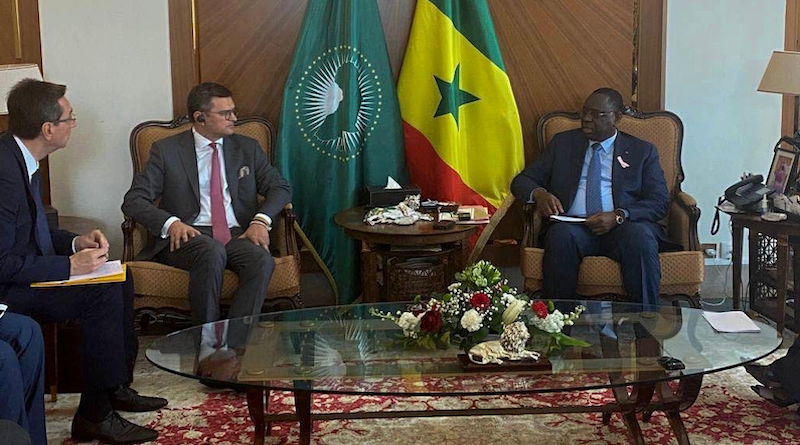
In early January, Ukrainian Agrarian Policy and Food Minister Nikolai Solsky visited Senegal, where he signed a memorandum of understanding between the Ukrainian ministry and the relevant Senegalese agency on January 9, the Agrarian Policy and Food Ministry website.
The document envisions the development of bilateral trade in agricultural produce and cooperation on scientific studies, investments, and interrelations between Ukrainian and Senegalese government agencies and private companies. It provides for the possible storage of Ukrainian grain at so-called grain hubs. Ukraine is willing to export not only foodstuffs but also other goods to African countries, which requires the development of logistical infrastructure.
The official document points out that Ukraine is considering the implementation of new logistical projects in Senegal to step up exports of its agricultural produce via the Port of Dakar. The west African republic of Ghana plans to implement new logistics projects, which will help increase agricultural exports from Ukraine. Ukrainian Agrarian Policy and Food Minister Nikolai Solsky and Ghana’s Minister of Food and Agriculture, Owusu Afriyie Akot, have thoroughly discussed steps to broaden agricultural cooperation and trade relations.
The parties discussed a potential joint project, a logistics hub that will be able to store food products, including grain, and will help stabilize food prices in the region. Besides Ghana and Senegal, Nigeria has also expressed high interest in setting up such hubs in its territory. The current geopolitical situation should rather have a reliable and diversified transit and transport infrastructure to destinations where it is badly needed, especially naturally disaster-affected regions in Africa.
“There have been meetings in Ghana, Senegal, and Nigeria. These countries regularly take a lot of food products, especially wheat. These are major markets from the standpoint of their populations compared to the European market or many other countries. It doesn’t have much purchasing power, but it is big and is developing, and therefore, it needs to be monitored,” Ukrainian media quoted Solsky as saying.
Solsky said each country he had visited was interested in developing cooperation with Ukraine and ready to expand the capacity of their ports to increase the volume of Ukrainian grain unloaded and stored there. But, before launching the construction of hubs in Africa to transship Ukrainian grain, Ukraine needs to receive guarantees from the countries concerned, including documenting the guarantees and the principles of operating them either by Ukraine, or whether it will be a state company, and how private traders will be involved in this cooperation.
Solsky said that his ministry would provide more information about infrastructure projects in mid-spring 2023, as in the coming months, it would have to hold additional consultations with the authorities of African countries and businesses interested in Ukrainian grain exports to Africa.
Within the framework of the roadmap, it has launched its development projects, including constructing facilities for the storage of agricultural foodstuffs and for onward distribution throughout some regional markets to offset food shortages in Africa. Ukraine, however, insists that the food and fertilizer trade should not be subjected to sanctions or any restrictions.
According to several reports carefully monitored by this author, President Volodymyr Zelensky held 18 conversations with African leaders in 2022, nine of which were the first instances of bilateral communication between Ukraine and these African countries. Ukrainian Foreign Ministry listed some of them, such as Ghana, Guinea-Bissau, Democratic Republic of Congo, Zambia, Ivory Coast, Malawi, Mozambique, Niger, and Botswana.
President of Guinea-Bissau and Chairperson-in-Office of the Economic Community of West Africa Umaro Embalo visited Ukraine in October 2022. It was the first official visit by a leader of a sub-Saharan African state since 2004, according to the Ukrainian Foreign Ministry.
Ukrainian Foreign Ministry Dmitry Kuleba, for his part, held 35 phone calls and meetings with his counterparts from African countries in 2022, the ministry said. The first-ever African tour by a Ukrainian foreign minister took place in October 2022. The report indicated that Minister Kuleba visited Senegal, Ivory Coast, Ghana, and Kenya.
Ukraine’s Special Representative for the Middle East and Africa, Maxim Subkh, appointed in July 2022, also visited five African countries. Within this emerging multipolar world, Ukraine is broadening its geopolitical influence, and of course, it is important for Ukraine to fix its diplomatic presence on the continent to an appreciable level necessary for active interaction, in a continuous and efficient manner, with Africa. It has official representation, an observer status, at the African Union.
Arriving back in Kyiv after his visit to Washington in December, President Volodymyr Zelensky, in a video address, announced that Ukraine would open 10 new embassies in African countries.
“We are rebooting relationships with dozens of countries in Africa. We must strengthen this as we have already determined ten countries where new Ukrainian embassies in Africa will be opened. We have also developed a concept of the Ukraine-Africa Trade House. Its offices will open in the capitals of the most promising countries of the continent,” he said.
President Zelenskiy considers Africa as a unique and dynamically developing continent with whom to have relations. In addition, these countries are steadily gaining political weight and achieving significant economic successes, it, therefore, becomes necessary to look for more new partners, eventually targeting African countries.
The Chairman of the African Union and President of Senegal, Macky Sall, together with the Chairperson of the African Union Commission, Moussa Faki Mahamat, visited Moscow and Kyiv in an attempt to mediate the conflict, but without any result in sight.
“We do not want to be aligned on this conflict, very clearly, we want peace. Even though we condemn the invasion, we’re working for a de-escalation, we’re working for a ceasefire, for dialogue … that is the African position,” Senegalese Macky Sall said back in May 2022.
Meanwhile, Africa is still divided over the crisis between Russia and Ukraine, the crisis that has caused global economic instability since February 24, 2022. The African Union (AU) and African leaders understand aspects of the geopolitical complexities, implications and possible solutions to the existing conflict between Russia and Ukraine.
Related
World
IFC Injects $150m into Nubank to Boost Operations, Access in Colombia 
Published
5 days ago
on
January 17, 2023
By

By Adedapo Adesanya
In its first investment in a digital bank in Latin America and the Caribbean, the International Finance Corporation (IFC) has granted a $150 million loan to Nubank to strengthen its presence in Colombia.
The 3-year local currency loan will be used to boost the growth of Nubank’s local operations and expand access to financial services in the country.
Lack of access to formal financial services is a major challenge to economic growth in Colombia. Digital transformation can provide new opportunities to improve financial inclusion and increase productivity across the country’s population, especially among women and minority groups.
With the new loan, it will aim to increase access to payment systems for Colombians, in addition to promoting greater competition in the industry in favour of consumers.
The loan is aligned with Nubank’s strategy of becoming Colombia’s leading digital financial services company and promoting access to 100 per cent digital financial services that are more efficient, inclusive, and easy to use.
With more than 400,000 cards issued in the last 10 months, Nu Colombia, a subsidiary of Nubank, is the fastest-growing credit card issuer in the country, with clients in all departments and nearly 80 per cent of municipalities.
Speaking on this, Mr David Vélez, CEO and founder of Nubank, said, “We are very proud that an institution like IFC has trusted us to continue generating a positive impact in Latin America.
“This loan reflects confidence in our business model, the solidity of our operation, and the contributions we are bringing to Colombia’s financial inclusion, a country with low financial services penetration and high use of cash.”
IFC’s Managing Director Mr Makhtar Diop, added, “Our loan to Nubank means more Colombians will have access to more and better financial services.
“Greater financial inclusion is a must for economic growth, and digital banking will play a key role in meeting the needs of underbanked and unbanked retail customers. This investment aims to both address those needs and to catalyze further investment in the financial sector in Colombia and the region.”
Related

Latest News on Business Post
- Stock Market Down by 0.06% as Investors Sell Dangote Sugar, Nestle January 21, 2023
- Value of Naira Drops at Official Market, Closes Flat at Others January 21, 2023
- NASD OTC Stocks Appreciate 0.53% January 21, 2023
- Oil Gains 1% as China Boosts Market Confidence January 21, 2023
- Fidelity Bank Takes Free Medical Tests, Treatment to Lagos Island Residents January 20, 2023
- Tech Stocks May Lead Initial Rebound On Wall Street January 20, 2023
- Experts Advise Crypto Investors to Utilise Wallets to Avoid Loss January 20, 2023
- IPMAN Blames NNPC for Lingering Petrol Scarcity January 20, 2023
- Nigeria’s Maternal Mortality Ratio Now 814 per 100,000—Ogunrinde January 20, 2023
- GlobalData Forecasts 2.7% Growth for Nigeria’s Economy in 2023 January 20, 2023

Like Our Facebook Page
%d bloggers like this:
