




13 Jun
Share OPINION | How Africa could become a climate saviour, not a victim Lara Williams 0:00  Subscribers can listen to this article
 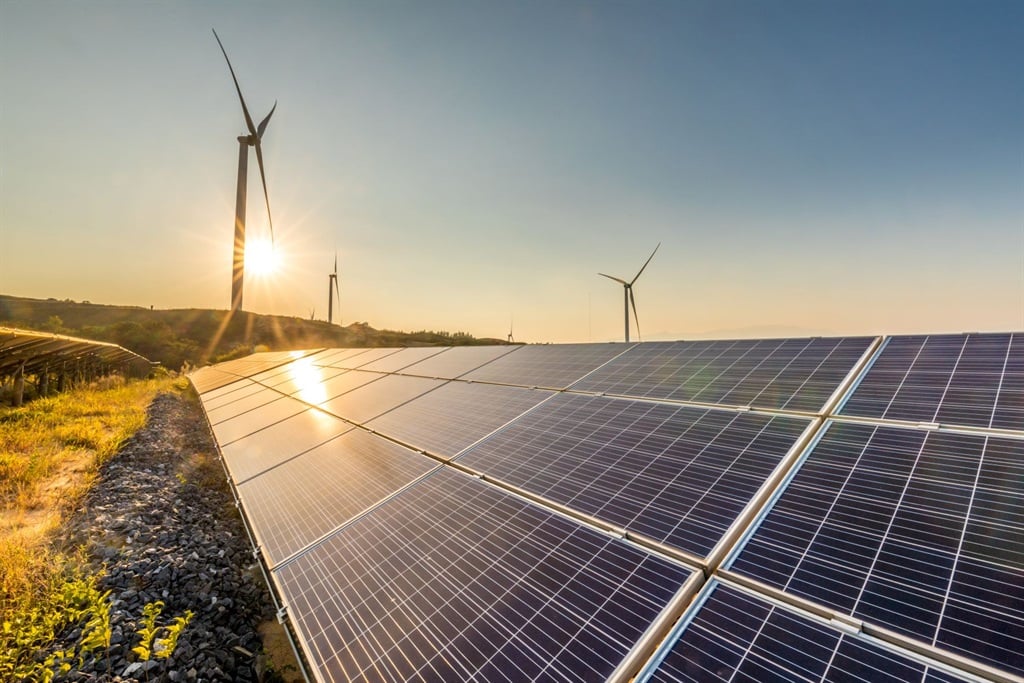 Africa's renewable energy potential can help global decarbonisation. Getty Images
The African continent has three things going for it – a young workforce, abundant natural resources and the potential for renewable energy, writes Lara Williams.
- For climate change news and analysis, go to News24 Climate Future.
In the climate change discourse, Africa is typically cast as a victim. But what if it could instead become our hero?
The continent is suffering the consequences of the climate emergency, despite bearing little responsibility for the carbon emissions that have caused it.
As of 2021, Africa had contributed just 2.8% of the world's cumulative CO2 emissions — for context, the US is responsible for roughly 25%. Africa faces extreme heat, food and water insecurity, increased diseases and changing weather patterns. Collectively, African economies have been losing between 5% to 15% of annual per capita growth in gross domestic product because of climate change.
But some envision a different path for Africa, in which investors place its 54 countries at the heart of a green Industrial Revolution. The continent has three things going for it – a young workforce, abundant natural resources and the potential for renewable energy.
READ | Black Girls Rising: Mentoring project behind new wave of young climate advocates in SA
Among the optimists is James Mwangi, co-founder and chief executive officer of Africa Climate Ventures. His company's investments include KOKO Networks Rwanda, a startup aiming to provide clean cooking fuel at a price that undercuts charcoal, and Great Carbon Valley, a developer looking at harnessing Kenya's renewables resources for green industry and technical carbon dioxide removal (CDR) methods.
While projects have initially focused on the east of the region, Mwangi says there's scope for transformation across the continent.
To achieve climate-positive growth, three elements are needed. First, Africa needs to circumvent emissions-intensive technologies for its own production and consumption.
Compared to developed nations, there's less need for retrofitting simply because things haven't been built or bought yet. For example, many African countries don't have advanced concrete and steel industries yet, meaning that nations can start with low-carbon facilities.
Second, Africa can help accelerate global decarbonisation by hosting more of the world's energy-intensive industrial processes and powering them with renewable energy. Kenya, for example, estimates it has roughly 10 000 megawatts of geothermal energy potential, but just 950MW of capacity installed.
"You literally have countries importing coal from Africa alongside iron ore from Africa to turn into steel somewhere else," says Mwangi. "Why not do an electrolysis-based process right here? Leave the coal in the ground and save the shipping fuel while you're at it."
READ | SEE | Africa's leading geothermal energy producer
Those renewable energy opportunities and plentiful natural resources are also part of the reason why the third element — scaling up carbon dioxide removal — could succeed.
In Ghana, biochar — a charcoal-like substance, which is a stable form of carbon and can be used as fertiliser, made by heating waste biomass in a container with no oxygen — can help cocoa farmers. And with ideal geological conditions for CO2 storage, Kenya could host direct air capture (DAC) hubs in the Great Rift Valley.
With 77% of the population of sub-Saharan Africa lacking access to electricity, it may seem odd to focus on connecting industry and CDR to the grid rather than people. But doing the former should lead to the latter.
The problem is that African economies are over-leveraged, particularly with rising interest rates, meaning they can't commit the money to invest in more capacity for their grids. There's also no visible demand, says Mwangi.
"You can say, well, we've got all these people without electricity, but do they have money right now? You could say they'll have money once they have electricity, but you can't lend on that basis."
Newsletter Weekly Climate Future Weekly An overview of the challenges and opportunities of the climate crisis, as it changes the world we know. Sign up
A potential solution to this conundrum is providing industrial anchor demand for grid expansion, taking financial risk out of the investment. The key will be in thoughtful and fair project design — for example, allowing the grid to allocate 20% of a project's power output to new areas.
There's also the potential to make energy more affordable. In Kenya, electricity comes at a premium because demand is volatile and consumers end up paying for idle capacity. Increasing demand spreads the costs over more payers and improves efficiency.
Africa faces huge capital costs to deploy renewables and other low-carbon technology. Despite the enormous potential, it's seen little of the world's clean-power investment. Addressing this is key.
One option is for multinational development banks such as the World Bank to take a larger role in financing or insuring these investments. Regulators also need to ensure carbon markets, seen as an important future source of financing for the continent, are fair, transparent and work to deliver credible benefits.
Western climate protectionism is a potential threat. The US Inflation Reduction Act, for example, risks unintentionally killing off pathways for Africa, supporting only domestic supply chains. Excluding, say, Tanzanian green steel from subsidies also extinguishes an opportunity for sustainable development and fences off a future trade partner.
READ | OPINION | US laws to promote home-grown industries will hurt African economies
Environmental justice also needs to be considered — there have been examples of green transition projects around the world associated with land grabs and human rights abuses.
But there are also examples of how to do it better, such as Kipeto Energy, a Kenyan company that offers landowners 1.4% of the gross annual revenue generated by windfarms. That can translate to $12 000 annually for each wind turbine on their land.
If investors and developers take a responsible, people-centric approach, with high standards and strong community engagement, African nations could enjoy climate action coupled with rising living standards. With our remaining carbon budget to stay below 1.5C of warming rapidly diminishing, green African growth is an opportunity for all.
Next on Business WATCH | The Austrian winemakers switching grapes to account for climate change
13 Jun
 description username Most read For Subscribers
- 'Russia may bankrupt SA.' Dire warnings after US fires warning shot over AGOA
- ESKOM LIVE | Breather from load shedding overnight
- 'NHI is 1 000 years away.' Govt is blocking much-needed healthcare reforms, experts say
- Court scraps tender won by Gupta-linked JV to build SA diplomatic compound in New York
- South Africa seeks help from China to safeguard supply of solar panels
- 'Russia may bankrupt SA.' Dire warnings after US fires warning shot over AGOA
- NHI Bill gets the nod from National Assembly, but faces tough, long road ahead
- Sikonathi Mantshantsha | Open public representatives' tax records. There's nothing to hide, right?
- Mpumelelo Mkhabela | Business has no business getting involved in functions of the state
- Busisiwe Mkhwebane has much innuendo, but few straight answers, on Tina Joemat-Pettersson
Currencies Commodities Jse Indexes Rand – Dollar 18.34 +1.6% Rand – Pound 23.22 +1.2% Rand – Euro 19.87 +1.2% Rand – Aus dollar 12.46 +1.1% Rand – Yen 0.13 +1.4% Platinum 977.16 +0.1% Palladium 1,385.43 +2.5% Gold 1,942.46 -0.1% Silver 23.92 +1.1% Brent Crude 74.29 +3.3% Top 40 72,629 +0.2% All Share 78,060 +0.3% Resource 10 69,555 +1.7% Industrial 25 104,636 -0.8% Financial 15 16,006 +1.0% All JSE data delayed by at least 15 minutes  Company Snapshot Newsletters
Climate Future Weekly
An overview of the challenges and opportunities of the climate crisis, as it changes the world we know.
Get the newsletter Game on!
Can you ace them all?
Today’s crossword, wordflower, sudoku and weekly news quiz
Play Now WATCH: Here's why this commercial architect uses his Mac to make magic
13h ago
 How the synchronised magic of Mac can revolutionise the way you work
11h ago
 Another global advertising awards win for the Adspace Studio
01 Jun
 Discover the bold leadership style of Nedbank’s Buli Ndlovu
30 May
 Find more Editorial feedback and complaints
Contact the public editor with feedback for our journalists, complaints, queries or suggestions about articles on News24.
LEARN MORE Government tenders
Find public sector tender opportunities in South Africa here.
This portal provides access to information on all tenders made by all public sector organisations in all spheres of government. Browse tenders
