




Visit the new DW website
Take a look at the beta version of dw.com. We're not done yet! Your opinion can help us make it better.
We use cookies to improve our service for you. You can find more information in our data protection declaration.
- Albanian Shqip
- Amharic አማርኛ
- Arabic العربية
- Bengali বাংলা
- Bosnian B/H/S
- Bulgarian Български
- Chinese (Simplified) 简
- Chinese (Traditional) 繁
- Croatian Hrvatski
- Dari دری
- English English
- French Français
- German Deutsch
- Greek Ελληνικά
- Hausa Hausa
- Hindi हिन्दी
- Indonesian Indonesia
- Kiswahili Kiswahili
- Macedonian Македонски
- Pashto پښتو
- Persian فارسی
- Polish Polski
- Portuguese Português para África
- Portuguese Português do Brasil
- Romanian Română
- Russian Русский
- Serbian Српски/Srpski
- Spanish Español
- Turkish Türkçe
- Ukrainian Українська
- Urdu اردو
Wrong language? Change it here DW.COM has chosen English as your language setting. Advertisement
Africa
Why Africa prints money in Europe
At least 40 African countries print their money in the UK, France and Germany — decades after independence, raising questions about self-sufficiency. DW examines what prompts them to outsource their currency production.
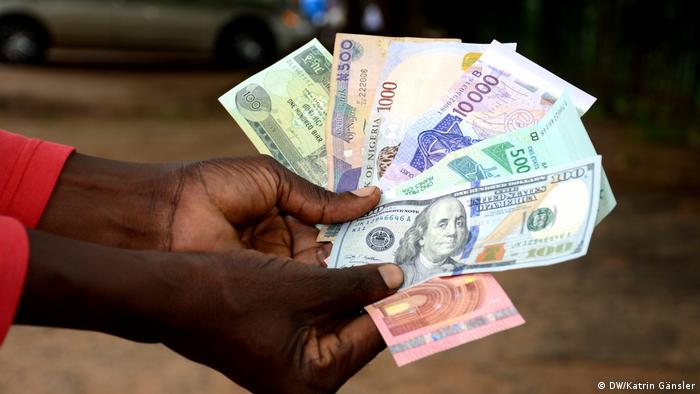
Only a handful of African countries print their own banknotes
Last July, a delegation from The Gambia visiting the Nigerian Central Bank asked if the Gambian dalasi could be ordered from its West African neighbor.
The Gambia's central bank governor, Buah Saidy, said the country was running low on its national currency.
The tiny West African country had to redesign its currency after the defeat of former President Yahya Jammeh, who ruled The Gambia from 1994 until he was forced into exile after refusing to accept defeat in the 2016 elections.
Jammeh, who is accused of human rights violations and killings of political opponents during his 22-year reign, had images of himself on the nation's banknotes.
After his ouster, the Gambian Central Bank set about destroying those images.
Now, the dalasi notes have images of a fisherman pushing his canoe out to sea, a farmer tending to his rice paddy, and a spattering of colorful, indigenous birds.
Outsourcing the cash
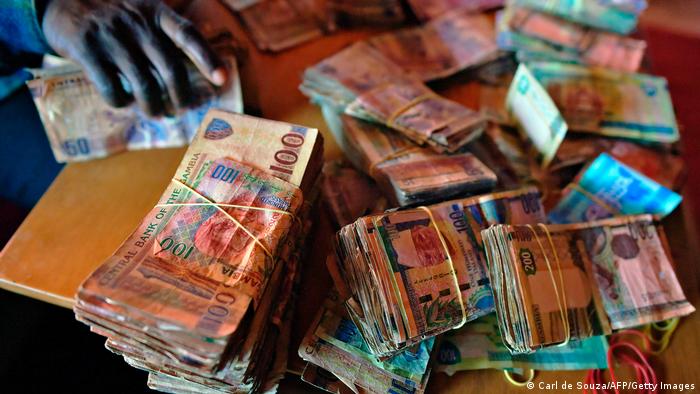
After the ouster of former strongman Yahya Jammeh, The Gambia's central bank destroyed Dalasi notes containing his image
One issue remains, however: The Gambia doesn't print its own currency. It places orders with UK companies, resulting in a shortage of liquid money.
And The Gambia is not alone in having its money printed in another country.
More than two-thirds of Africa's 54 countries print their money overseas, mostly in Europe and in North America. It comes at a time when the African Union is trying to usher in a golden, made-in-Africa age that should see Africa beef up production and enjoy greater profits.
Among the top firms that African central banks partner with are British banknote printing giant De La Rue, Sweden-based Crane, and Germany's Giesecke+Devrient.
Watch video 01:09
China and Nigeria tighten ties in trade and currency
How transparent is the process?
It is perhaps surprising that almost all African countries import their currencies. The practice could even raise questions of national pride and national security.
For richer countries, like Angola and Ghana, there's also the issue of real autonomy and economic sufficiency.
Most countries are tight-lipped about their currency-printing processes — likely for security reasons. The printing firms are even less transparent.
None of the firms DW contacted responded to requests for a list of African countries that print with them.
-
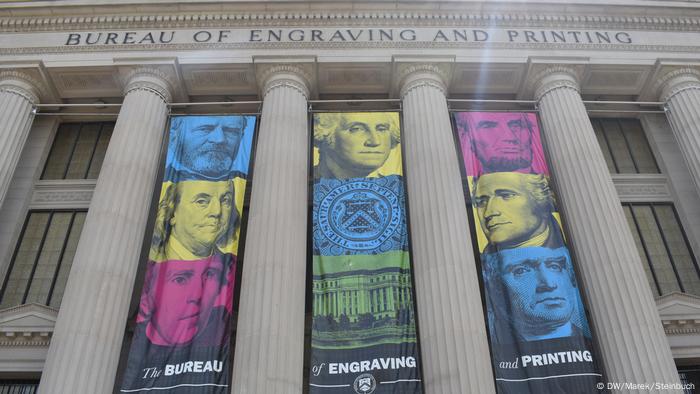
Inside the money factory that prints $500 million every day
The money factory
America's largest money factory, the Bureau of Engraving and Printing (BEP), was first created in Washington in 1862. The entrance, with its bright, neoclassical limestone facade and huge columns, resembles a fortress.
-
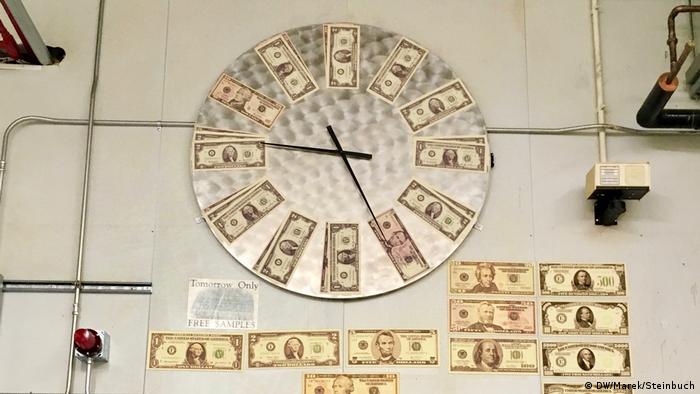
Inside the money factory that prints $500 million every day
The dollar clock
Around a million visitors per year pass by the printing rooms via a screened corridor. Wherever you are in the BEP building, you are reminded of the greedy demon Mammon, who clearly still rules here. Even this oversized clock is decorated with dollar bills.
-
Inside the money factory that prints $500 million every day
All hail the mighty Greenback
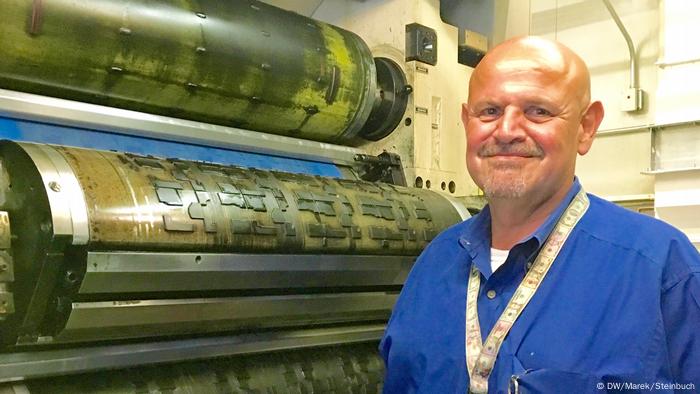
The color green is perhaps one of the most important and oldest security features of the dollar bills. The color recipe is top secret and has been patented. Ed Mejia, who is one of just a few people who know it, takes care of the engraving process. His machine can create 10,000 sheets of dollars per hour — but makes a noise of about 95 decibels (about the same noise level as that of a drill).
-
Inside the money factory that prints $500 million every day
Off to a vault to dry
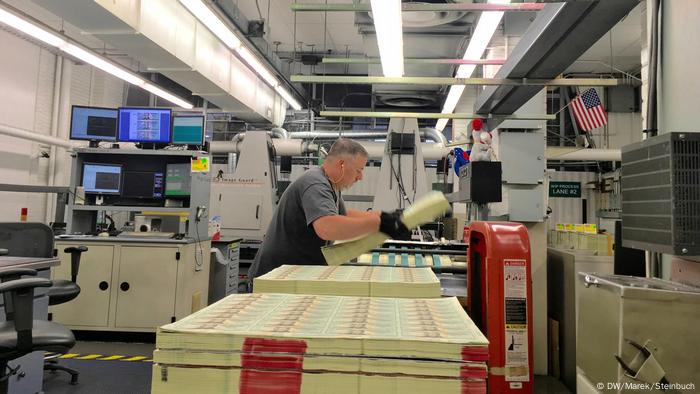
Inspectors constantly monitor the quality of the print. As the notes need three days to dry, they are stored in a vault. In total, notes worth $560 million (€484 billion) are produced here every day. The costs for production and paper are 3.6 cents per dollar.
-
Inside the money factory that prints $500 million every day
Four-eyes principle
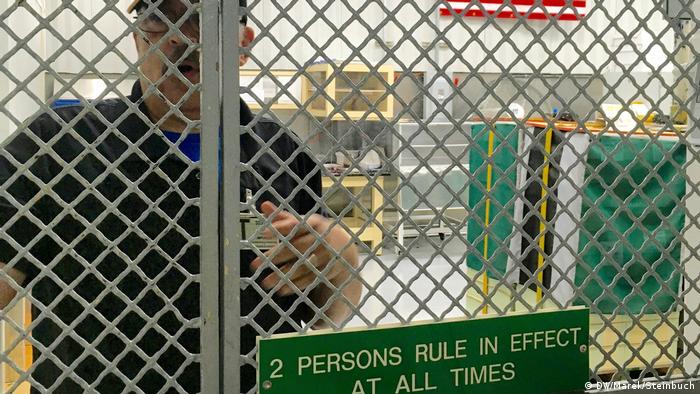
In the high-security area, a sign reminds staff that no-one is allowed to work alone. Incidentally, the average annual salary of BEP employees is $93,000. That's almost twice as high as the average US income.
-
Inside the money factory that prints $500 million every day
Final number
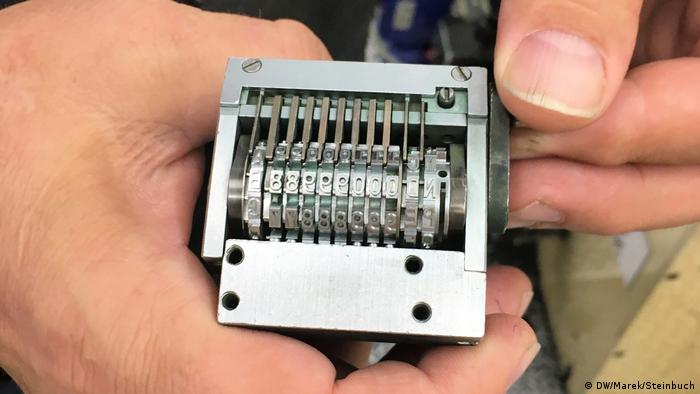
The last stage on the way to becoming the world's leading currency is to assign each note its own serial number. The stamping machine for this is set by hand.
-
Inside the money factory that prints $500 million every day
Ready for shipping
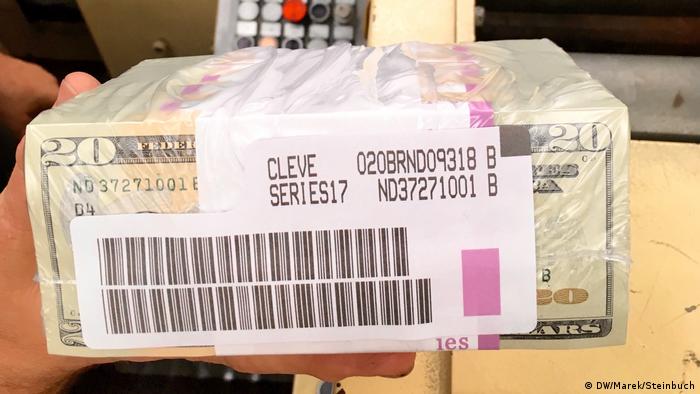
One more machine counts, sorts and bundles the $20, $50 and $100 bills. Ten bundles are shrink-wrapped in plastic. An employee collects the packages on a trolley, ensuring that the sticker with the unique serial number is showing. Until the dollars are delivered to the central bank and the serial numbers released, they are worthless.
-
Inside the money factory that prints $500 million every day
Security above all else
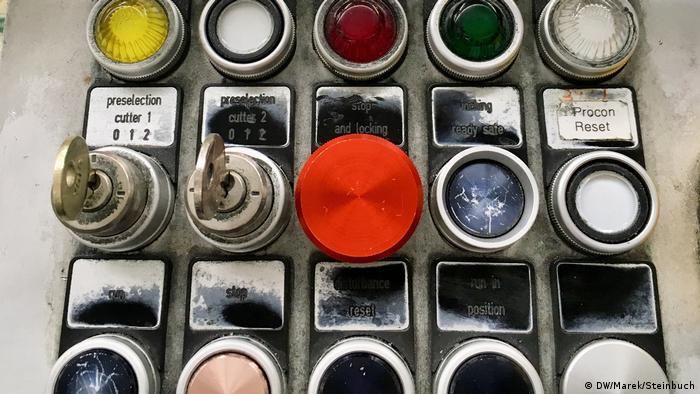
The safety of the BEP's estimated 2,000 employees is paramount during the complex printing process. The presses can be switched off instantly by sensors or a red button.
-
Inside the money factory that prints $500 million every day
Subtle irony
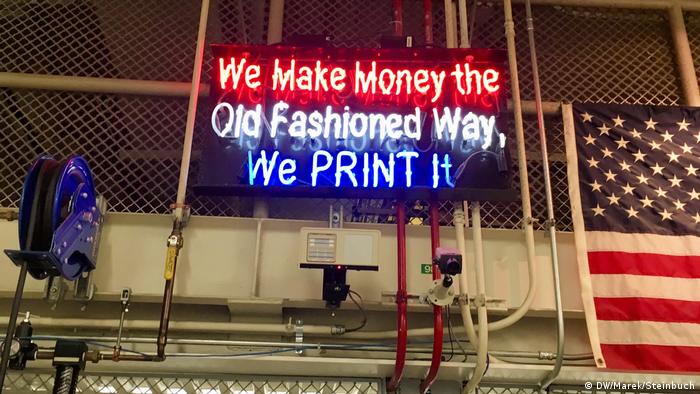
As well as patrotism — the star-spangled banner is visible everywhere — the bureau's managers and staff are not above humor. Authors: Anja Steinbuch and Michael Marek.
Author: Anja Steinbuch (mm), Michael Marek
Counting the cost
Ethiopia, Libya and Angola — along with 14 other countries — place orders from De La Rue, writes Ilyes Zouari, who studies African countries.
Six or seven other nations including South Sudan, Tanzania and Mauritania are said to print theirs in Germany, while most French-speaking African countries are known to print their money with France's central bank and with the French printing company Oberthur Fiduciaire.
It's not clear how much it costs to print African currencies like the dalasi, although the US dollar costs between 6 and 14 cents.
But it is likely that the cost of printing for over 40 African currencies is significant.
In 2018, a central bank official in Ghana complained to local journalists that the country spends huge amounts for its UK orders of the Ghanaian cedi.
And since countries usually order millions of notes to be carted in containers, they usually have to pay hefty shipping fees. In The Gambia's case, officials say shipping costs rack up a bill of £70,000 (€84,000, $92,000).
High demand
Still, while it may sound odd, analysts say that African countries printing much of their currency abroad is not unusual.
Many countries around the world do it. For example, Finland and Denmark outsource their money-making, as do hundreds of central banks around the world.
Just a handful of countries, like the US and India, produce their own currencies.
Mma Amara Ekeruche from the African Center for Economics Research told DW that when a country's currency is not in high demand — and not used globally like the US dollar or the British pound — it makes little financial sense to print it at home due to the high cost involved.
Money printing machines usually churn out millions of notes at a time. Countries with smaller populations, like The Gambia or Somaliland, would have more money than they needed if they printed their own.
"If a country prints one banknote for €10 at home and sees that it can print it for about €8 abroad, then why would they incur more costs to do that? It won't make sense," Ekeruche explained.
Some countries — like Liberia — don't attempt to print their own money because they don't even have a printing press — it is costly to set up and requires special technical capabilities.
Only a handful of African countries, like Nigeria, Morocco, and Kenya have enough resources to print their own currencies or mint their own coins, and even they sometimes supplement production with imports.
Watch video 01:08
Emerging markets currencies fall against US dollar
Is third-party printing secure?
Ekeruche said some individual countries attempting to produce their own currencies could fall victim to corrupt officials or hackers who might attempt to forge or manipulate them. In many cases, outsourcing is more secure.
Even with importing, there can be challenges. Containers of Liberian dollars shipped from Sweden disappeared in 2018, although the government later accounted for it.
Meanwhile, firms like De La Rue have existed for hundreds of years, mass-producing for central banks across the world.
They have the tools and experience to keep up to date with currency innovations, such as polymer which is considered cleaner, more durable and more secure than paper, with the plastic material allowing the inclusion of more sophisticated features to protect against counterfeits.
But outsourcing is not without disadvantages. Some countries could find themselves on the receiving end of economic sanctions. In 2011, for example, the UK withheld orders for Libya's dinar from De La Rue, after the UN sanctioned the late leader, Moammar Gadhafi.
-
Ghana's traditional chiefs wield power over land
New railway tracks mean new land deals
Ghana is spending $8 billion to revitalize and expand 1,400 km of railway track to transform how people and goods move around. One new stretch of track will even connect neighboring Burkina Faso with Ghana's ports. The government needs land to build the railway – and this means consulting with local chiefs, who have a big say over land rights.
-
Ghana's traditional chiefs wield power over land
Paying tribute to the ancestors
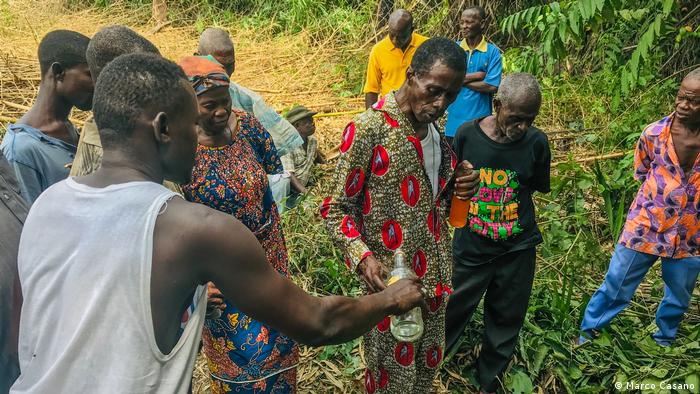
"May our ancestors accept the refreshment we offer them. We are gathered here to address our praise," proclaims a sorcerer as he offers a tribute on a site for the western line linking Kumasi, Ghana's second biggest city, with Takoradi port. Before bulldozers can start clearing the bush, the sorcerer performs rituals ordered by the local chief to obtain approval from the ancestors.
-
Ghana's traditional chiefs wield power over land
Constant negotiation with chiefs over land
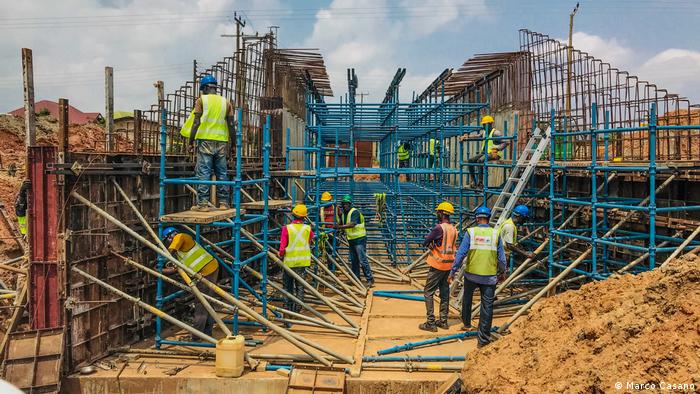
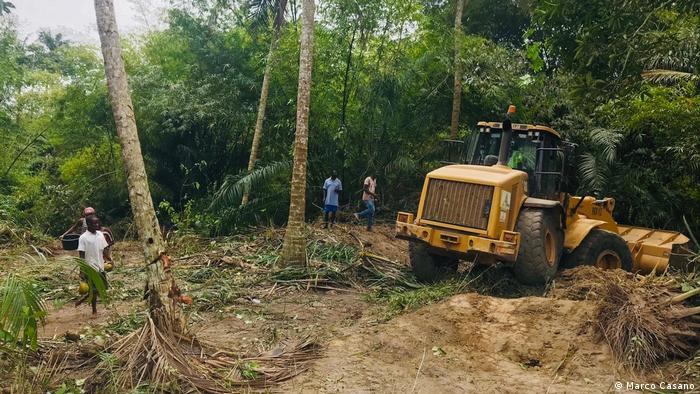
Ghana's government is busily acquiring people's land for the new railway projects. And as earth-moving machines start razing the bush, it's necessary to include the local chiefs in negotiations. If dissatisfied, they can interrupt the work. "We have a constant mediation task, which has now become part of our job," explains Marco Casano, a supervising engineer for Takoradi-Kumsasi railway project.
-

Ghana's traditional chiefs wield power over land
Farmers make way for progress – and chiefs have to step in
With more farmers being forced to make way for large infrastructure projects, like the railway, conflicts over land are becoming more frequent. Because the government often fails to provide adequate solutions, chiefs play a vital role in settling these disputes at local level.
-
Ghana's traditional chiefs wield power over land
Ancestral land yields to progress
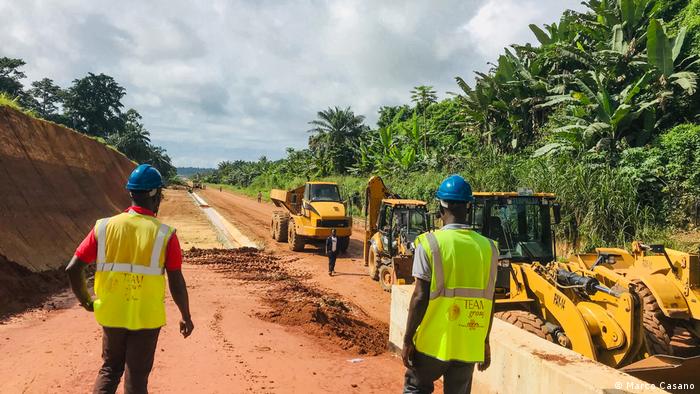
The rehabilitation of the abandoned Takoradi-Kumasi western line is of great importance for Ghana's mining sector. Manganese and bauxite are extracted in the area around Takoradi but the most of this is moved by road, clogging traffic with heavy trucks and destroying the road surface.
-

Ghana's traditional chiefs wield power over land
Ensuring the continuation of traditional chiefs
In Ghana's eastern Volta region, which borders with Togo, sub-chief Torgbe Diabo XI is carried on a palanquin on his way to lead the burial of the dead paramount chief of Fodome Traditional Area. As well as being the chief of his own village, he also has to coronate the next paramount chief in a process called 'enstoolment'. In his ordinary life, Torgbe Diabo XI works for a furniture company.
-
Ghana's traditional chiefs wield power over land
Swearing an oath to his community
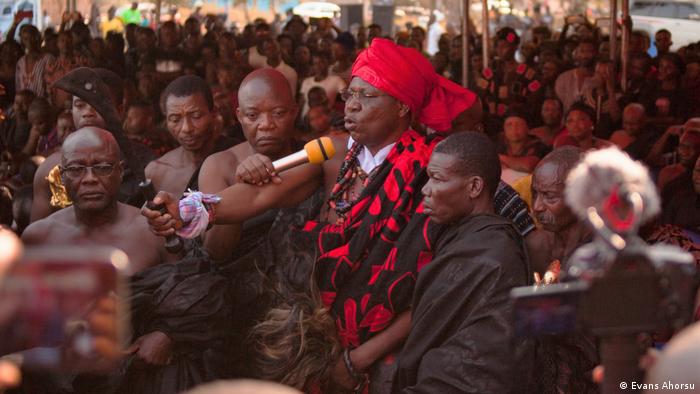
The new paramount chief of Fodome Traditional Area, Timothy Akpatsa II, swears an oath while raising the sword. The title rotates through two local royal families. The week before his public appointing, he was locked in a room to go through a training for his new leadership role.
-
Ghana's traditional chiefs wield power over land
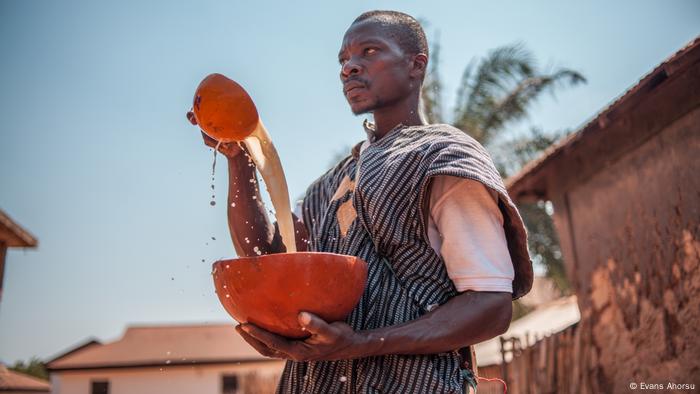
Resolving conflicts with a peace drink
During the chief's appointment ceremony, a peace potion is prepared and offered to those attending for serenity and protection. The cornmeal-based drink, used in many traditional rituals, is also used to seal the resolution of conflicts between neighboring communities.
-
Ghana's traditional chiefs wield power over land
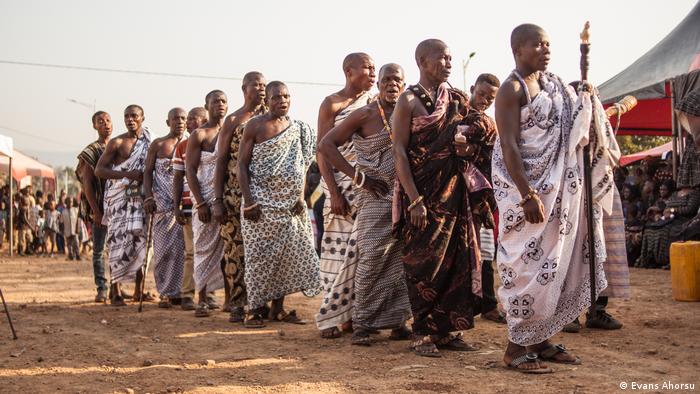
The linguists – speaking for the chief
The so-called 'linguists' are the chiefs spokespersons, or ambassadors. Once the new paramount chief has been fully invested with authority, the linguists come from nearby villages and line up to pay homage to the paramount chief on behalf of their own chiefs. The role of linguist is an important and respected one all over Ghana.
-

Ghana's traditional chiefs wield power over land
Defending the chief with magical powers
Towards the end of the appointment ceremony, a 'warrior' displays his magical powers through dance. In traditional times, warriors, once believed to have supernatural power, protected their community and conquered land.
Author: Jacopo Lentini
Why not print the notes in Africa?
African countries have been formulating plans to boost intra-African trade. There is currently more trade with Western and Eastern countries than there is within the continent.
Printing banknotes in Africa would boost profits on the continent and, at least theoretically, African countries could choose those with printing capabilities since there's likely some idle capacity.
But that is not happening in practice. "That’s due to trust issues between the countries," said Emmanuel Asiedu-Mante, a former deputy chief with the Ghanian central bank, and because many have been printing with overseas firms for years.
And there's the complicated case of Francophone Africa — the countries using the Central African CFA franc and the West African CFA franc. The currencies are tightly pegged to the euro because of colonial relations and are produced in France.
Still, there's hope that change could be on the horizon. With The Gambia's central bank, officials proposing a possible partnership with Nigeria, countries could start to look inwards for their currency orders. If that happens at scale, it could cut shipping costs drastically.
Edited by: Keith Walker
- Date 24.03.2022
- Author Shola Lawal
- Related Subjects Angola, Libya
- Keywords Libya, Angola, Botswana, banknotes, currencies, coins
- Send us your feedback.
- Print Print this page
- Permalink https://p.dw.com/p/48z3Y
Advertisement 
Send us your feedback via SMS
Got an opinion about the stories making headlines? Send us a text at +49-160-9575 9510. International SMS charges apply. Please make sure to include your name and your country. We will sample your texts in our show.
